
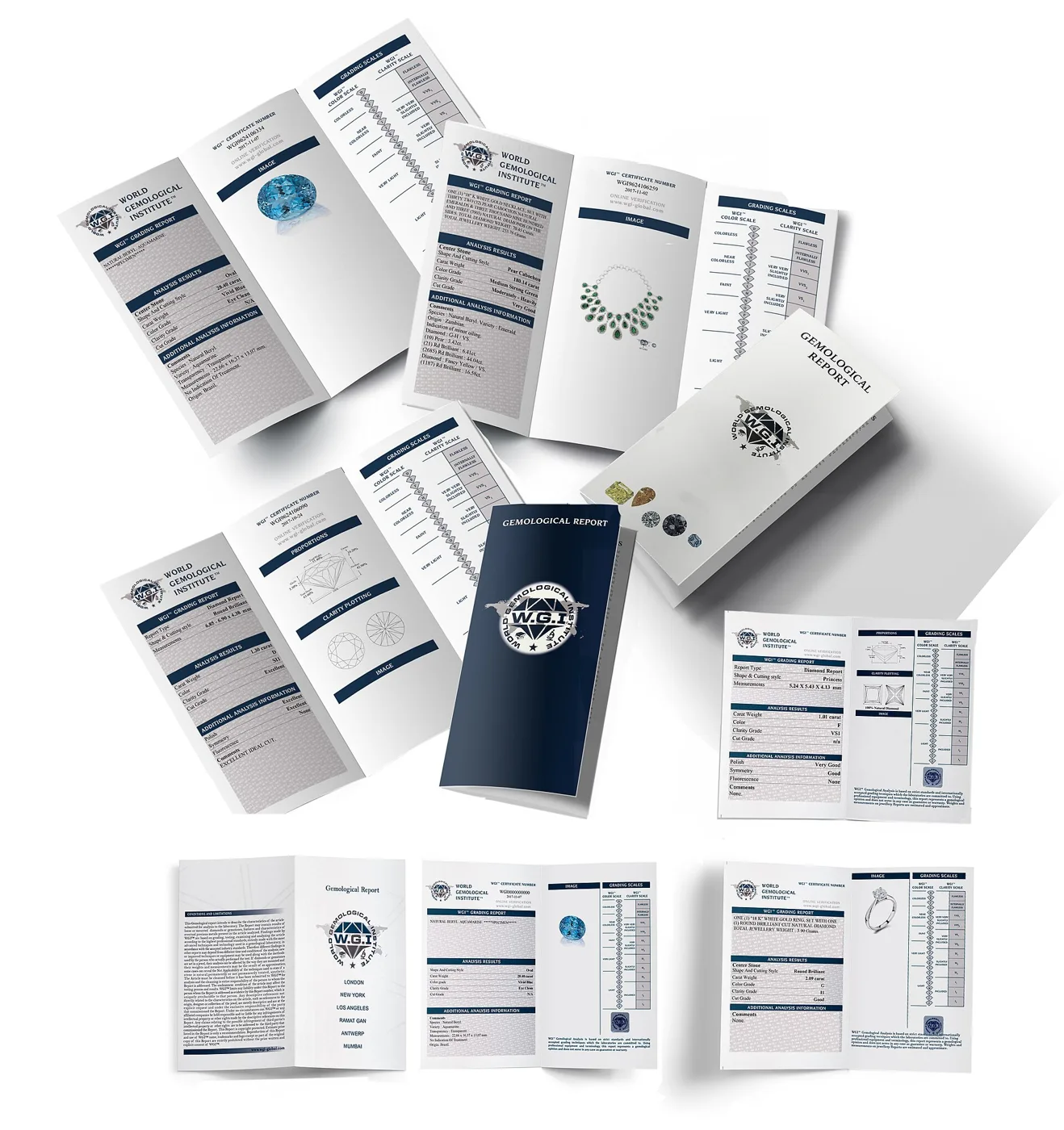
Why every laboratory sounds a little different
Two laboratories can describe one stone with different words. That caused real trouble in the trade. In 2001 the Laboratory Manual Harmonisation Committee, or LMHC, formed to fix it. The LMHC states that its main purpose is to work toward harmonised gemmological report language.
The committee brings together seven major laboratories based in America, Asia and Europe. It is not formally connected to any trade organisation. It publishes information sheets, with 13 on coloured stones and one on pearls, that set out agreed practice and terminology so a reader can understand the language in members' reports. The sheets change as new information appears.
When a stone carries a report from any serious laboratory, check whether the words match an LMHC sheet. If they do, you can compare reports from different houses fairly.
What a GIA report states
GIA's website describes its coloured stone reports in plain terms. A report gives the gemstone type and says whether the stone is natural or synthetic. It lists any detectable treatments. It records the cutting style, shape, weight, measurements and colour, and it carries a photograph. GIA accepts loose and mounted stones.
On origin the language is careful. GIA says origin is provided when it is determinable, and only for certain stones. As of 1 January 2026 those stones are alexandrite, emerald, Paraíba tourmaline, red spinel, ruby, sapphire, opal, peridot and demantoid garnet, plus untreated jadeite and omphacite jade from Myanmar or Guatemala. GIA redesigned its coloured stone reports on the same date.
What a GRS report states
GRS GemResearch Swisslab describes itself as an independent gemmological research laboratory. It determines origin and issues authenticity reports for ruby, sapphire and emerald, and it covers spinel, tourmaline and garnet as well. Its laboratories sit in Switzerland, France, Hong Kong, Thailand and the United States.
GRS issues reports for loose stones, for pairs and sets and for mounted jewellery such as rings, ear clips and necklaces. It identifies advanced treatments and offers a free online report verification service.
The lines to read, in order
Reports share a skeleton. Read the lines in this order.
- Natural or synthetic
- The first answer. Everything else depends on it.
- Species and variety
- What mineral the stone is and which trade variety applies. For tourmaline this line decides whether the stone is paraiba.
- Treatment
- What the laboratory detected. The word detectable matters, because a report records only what testing can find.
- Origin
- Present only for stones on the laboratory's origin list, and only when the data supports an answer.
- Weight and measurements
- Match these to the stone in your hand before you pay.
- Colour and shape
- A description that guides the eye. It does not replace looking at the stone in daylight.
Where reports reach their limit
A report is an expert opinion on a set of measurements. GIA's own Summer 2026 spinel study shows where that opinion thins out. The authors separated red spinel from Mogok and Vietnam by titanium and zinc, but orange spinel separated only partly, because Mogok stones overlapped with both Vietnamese deposits.
The lesson applies to every report. An origin line can be missing, and a missing line is an honest result. A treatment line records detectable treatments only. If something does not show up in testing, the report cannot list it.
The report also does not describe how the stone looks to you. Compare the stone to the photograph and the stated measurements in good light.
A worked example
Take our 3.53 ct Nigerian emerald with GIA report 1555539576, dated 24 June 2026. The report identifies a natural beryl of the variety natural emerald. It describes the colour as bluish green, the stone as transparent and the shape as a pear with a brilliant cut crown and a modified brilliant cut pavilion. Its finding is no indications of clarity enhancement.
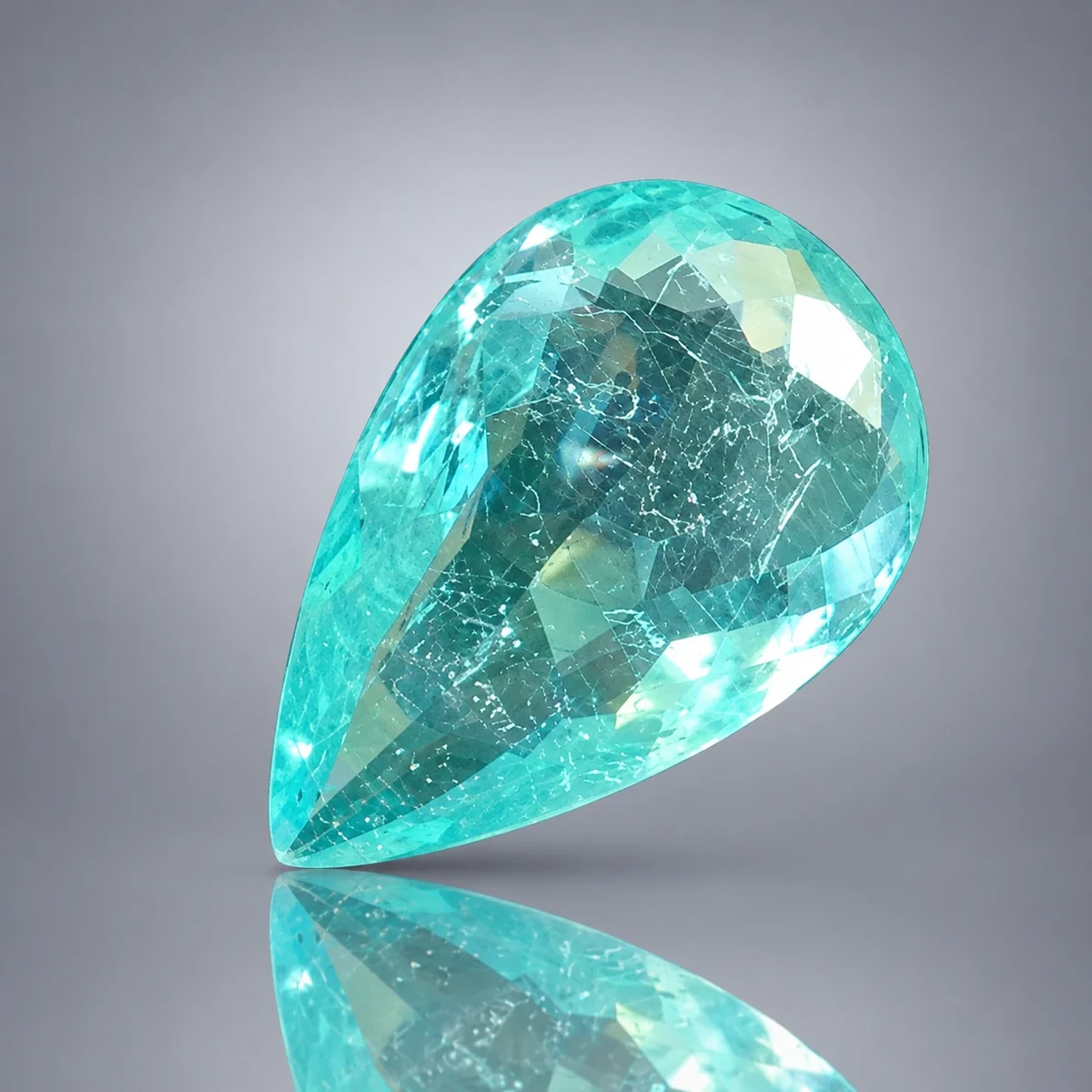
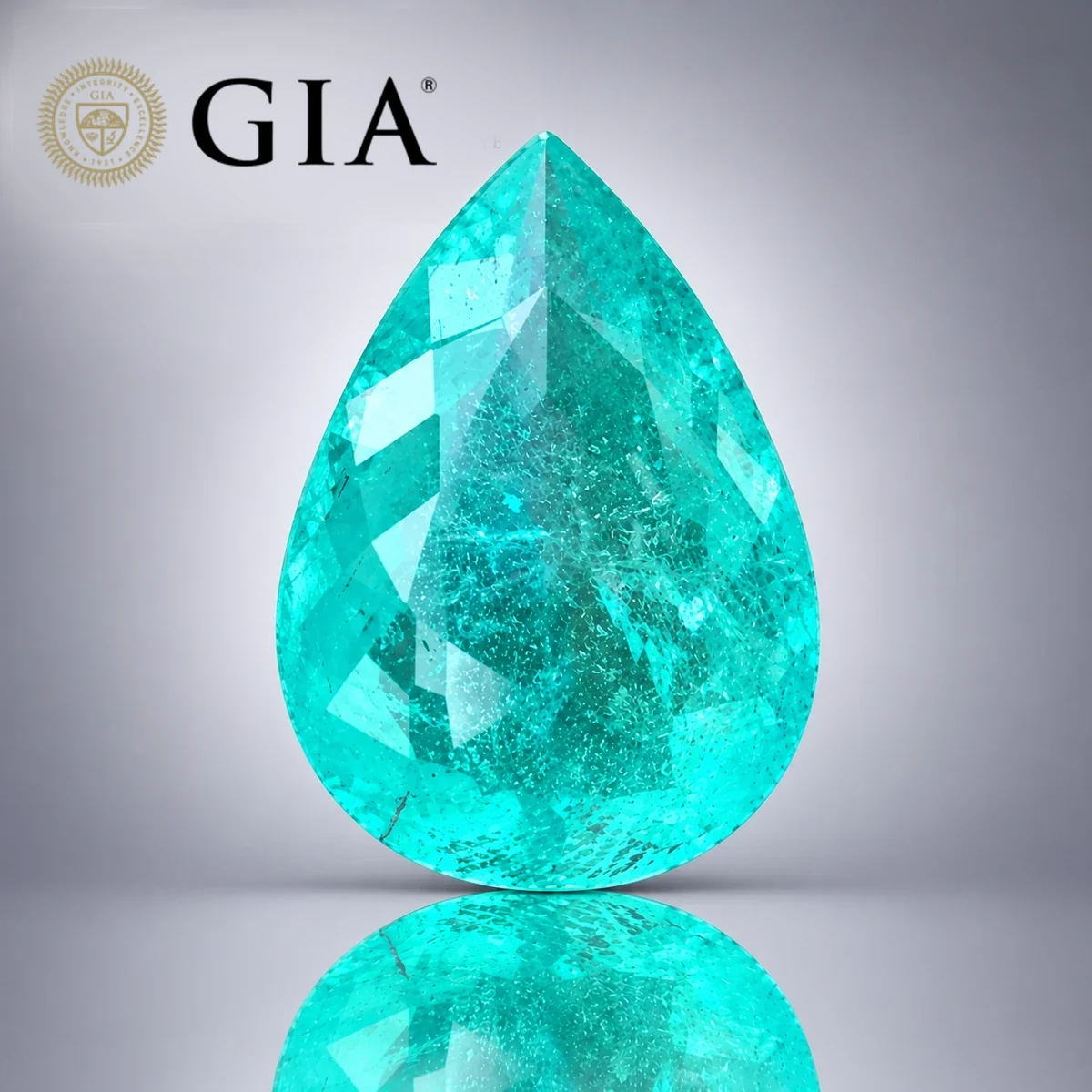
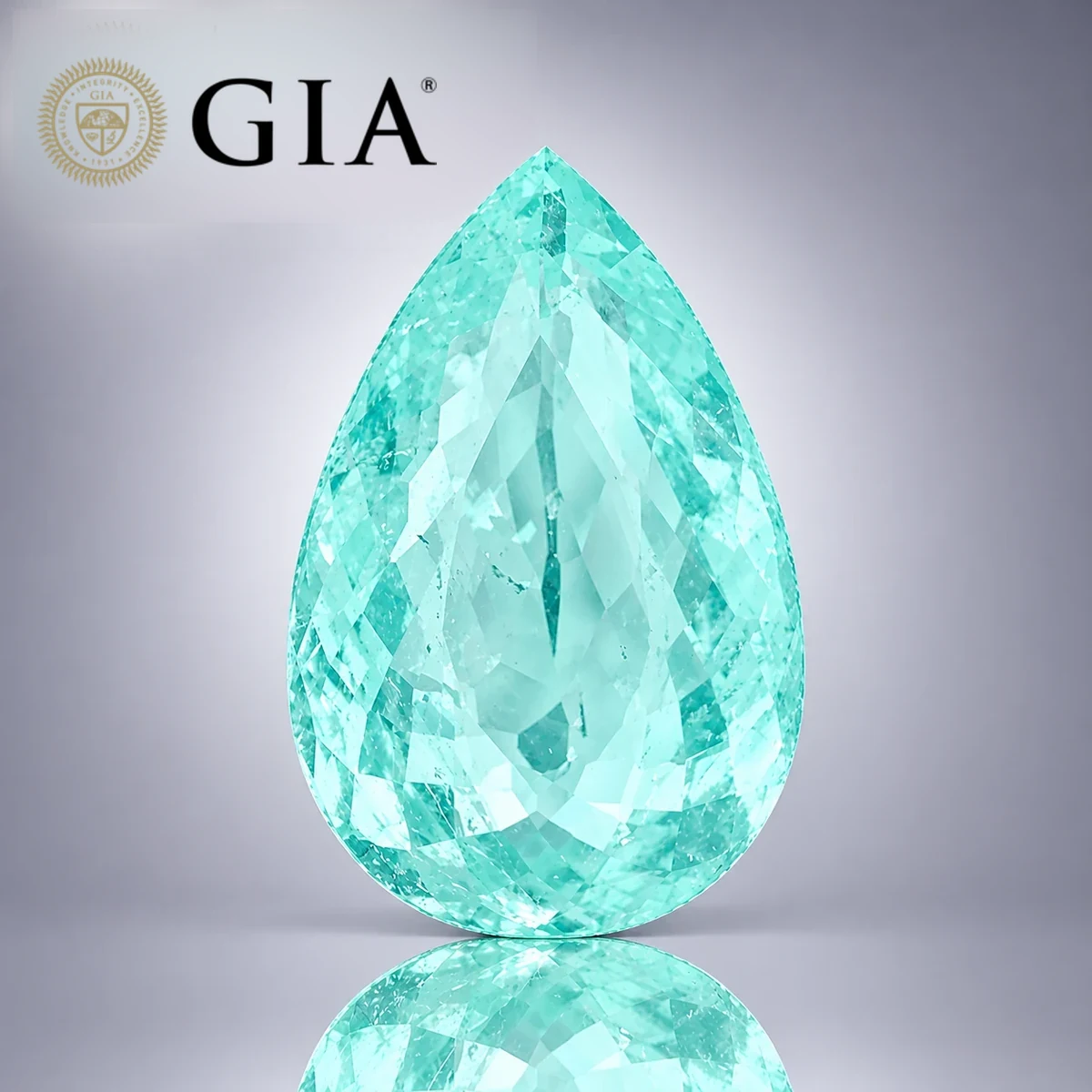
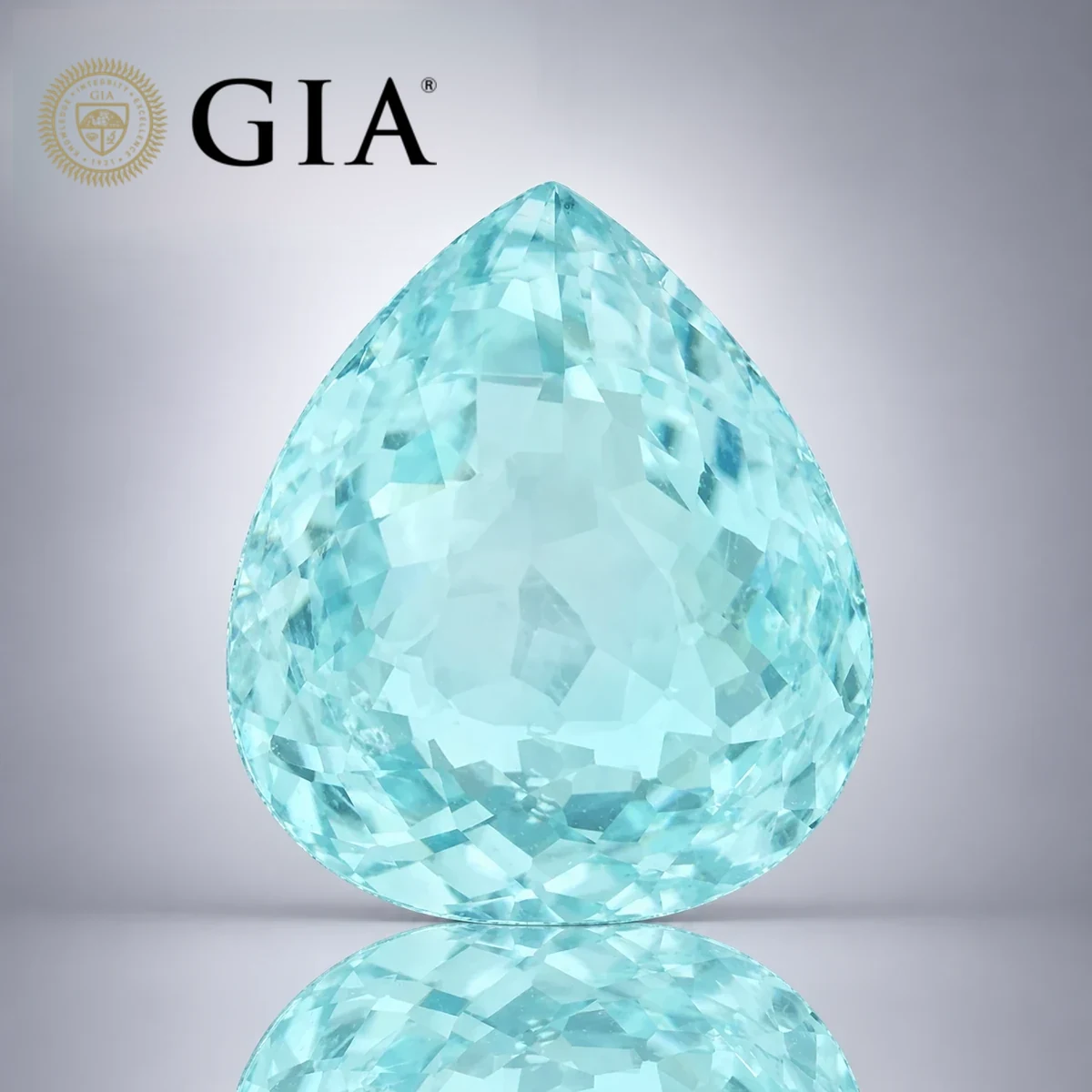
Now take our 15.69 ct paraiba pear with GIA report 1559553170, dated 26 June 2026. It identifies a tourmaline with the trade name paraiba, copper and manganese bearing, blue green, transparent, in a modified brilliant cut. Its finding is clarity enhanced.
Read the two side by side. Both stones are natural. Both carry a clear treatment statement, and the statements differ. A listing that said only natural would have hidden that difference.
Services around the report
GIA lists more than the report itself. The services fall into four groups.
- Add ons
- Express service, laser inscription, damage assessment and recheck and final observation.
- Follow up services
- Update, report conversion and report verification.
- Specialty services
- Monograph, GIA Portrait and notable letter for important stones.
- Batch services
- Coloured stone sorting and quality assurance.
Verify before you pay
A report is only useful if it belongs to the stone you are buying. GIA lists report verification among its follow up services. GRS offers a free online verification service. Use whichever the issuing laboratory provides and compare the number, the weight and the measurements.
If a seller shows a report from a laboratory you do not recognise, search for the laboratory and look for its verification page. If you find none, treat the report as a seller's opinion.
How we show reports
Most of the stones on our certified listings carry reports from GIA or GRS. Each listing shows the report image, the report number and the date, and the treatment line follows what the report states. For example, our GIA reported Nigerian emerald records that GIA found no clarity enhancement. Our GIA reported paraiba tourmalines record the findings for each stone.
Read the report before you read our description. If the two ever disagree, trust the report and tell us.
Looking for a stone like this?
We keep stock in Bangkok and answer questions about grading, treatment and price without pressure.

Join the conversation
Ask a question or share what you have seen. We read every comment and reply to the good questions.
Loading comments