
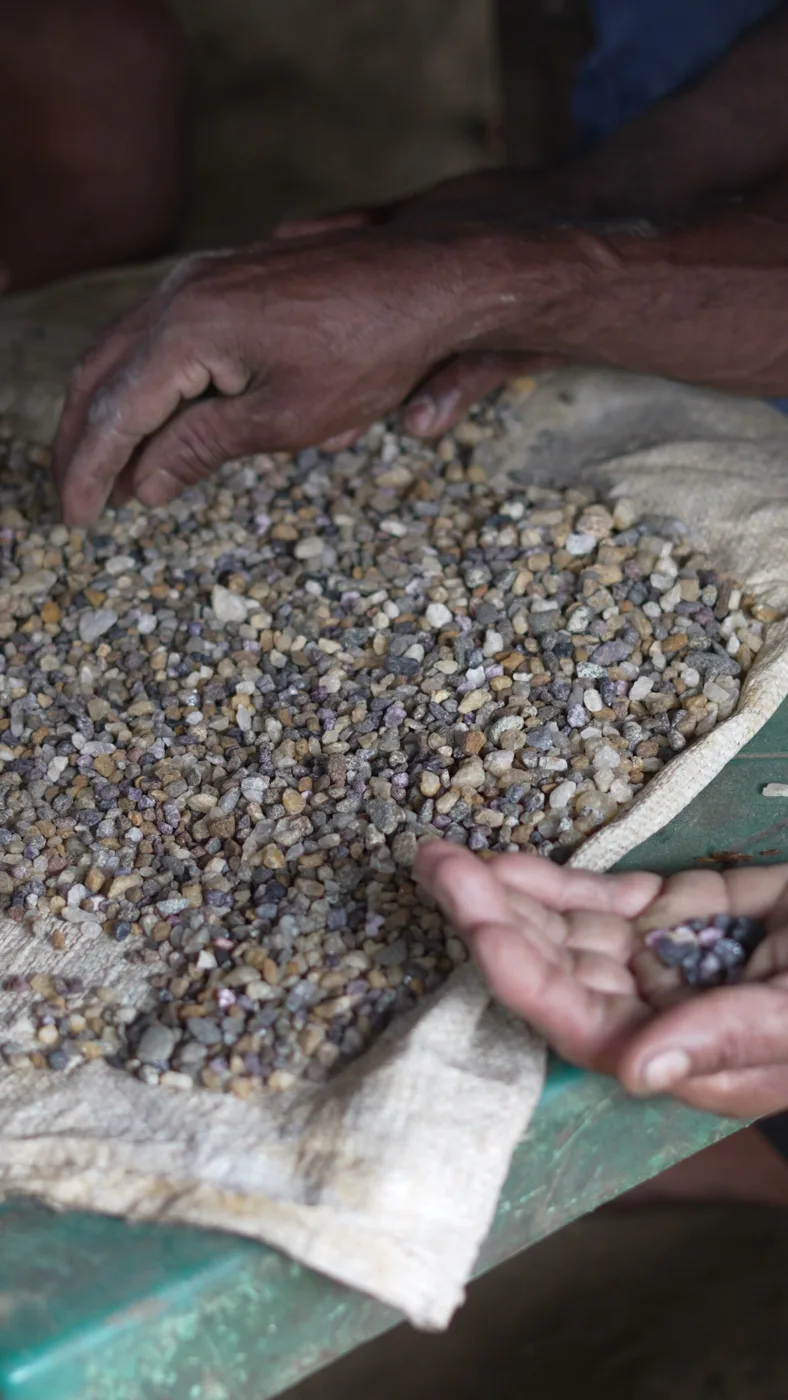
What the work looks like on the ground
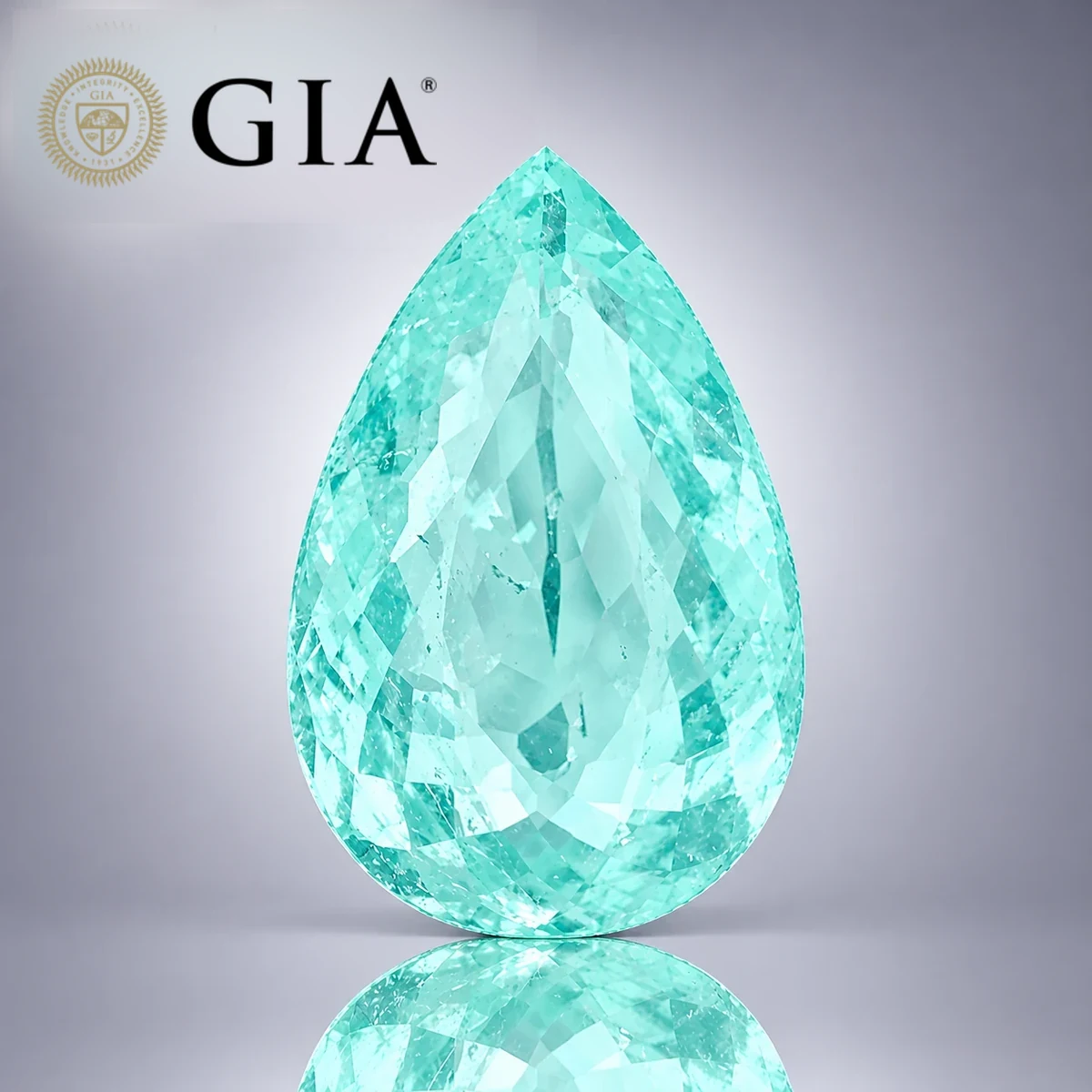
GIA's reports show how stones leave the ground. Brendan Laurs and colleagues described Mozambique paraiba mining in 2008. Artisanal miners work alluvial ground of about 3 square kilometres near Mavuco and dig through up to 5 metres of overburden with hand tools.
Andrew Lucas and Tao Hsu described Nigeria's Oyo State rubellite operation in 2017. Pits run 10 to 20 metres deep, miners climb in by ladder and 10 to 15 miners work each pit. The company planned more mechanisation and redesigned tunnels with better air circulation.
Both reports describe hand mining by small teams.
What responsible sourcing means
Richa Goyal Sikri wrote a long survey of the topic for the ICA, published in JNA in March and April 2023. It sets out several layers.
The foundation is the gem itself. The article calls the first principle accurate descriptive language and full disclosure of treatments and enhancements. A stone sold with false claims fails before anyone asks about the mine.
The second layer is supply chain due diligence. The article quotes CIBJO's Responsible Sourcing Blue Book, which says its policy is guidance and is not a chain of custody or traceability system down to a mine.
The third layer goes beyond legality. Responsible operators ask whether a mine brings local development gains, and not only whether it follows the law.
Why traceability is so hard
The ICA article lists the obstacles in plain terms.
- Cheap unverified stones
- A strong financial incentive exists to buy cheap gems from sources of unknown origin.
- Pressure on prices
- Pressure to buy at the lowest price can keep communities in poverty, because miners sell out of desperation.
- Traceability can backfire
- Insisting on traceability can push miners out of supply chains when they lack education and technology, and it can empower criminal actors.
- Smuggling and undervaluation
- In some countries exports are undervalued and rough stones are smuggled, which disadvantages responsible merchants.
- Buyers who do not ask
- Clients often do not carry out due diligence, which reduces a seller's reason to act properly.
- Separate efforts
- Large miners and auctions, trade associations and small mine to market projects work in separate silos.
The article is blunt about the limits. Responsible sourcing, it says, is not a silver bullet.
Country of origin versus mine of origin
Most laboratory reports and sales descriptions name a country. Gemfields, the miner, argues for naming the mine instead. The ICA article reports that view and also describes one technology aimed at it. Provenance Proof's Emerald Paternity Test embeds nanoparticles at the mine and records them in a digital ledger so a buyer can verify mine origin.
Technology like this remains rare and covers only certain mines. For most coloured stones a buyer sees a country and a trader's word.
What a small business can do
The ICA article quotes Cristina Villegas of the non profit group Pact, who advises suppliers to understand their sources, pick one area to work on with a mining community, then document, commit, grow and communicate. She states that responsibility begins with your own supply chain.
Examples exist. Vertriest's 2020 GIA report describes Mina Stones, a Nigerian company founded by GIA Graduate Gemologist Amina Egwuatu. It works directly with miners and has visited many production sites. It helped set up the AGJES Sparkle Foundation, which gives miners education on their stones, administrative help and tools.
The Coloured Gemstone Working Group's Gems and Jewellery Platform offers free resources for businesses, particularly standalone entrepreneurs. The ICA article also points to membership of trade bodies such as AGTA, CIBJO, ICA and the Responsible Jewellery Council as a route to certification.
Where the projects are
The ICA article mentions responsible projects in many countries. In Africa it cites Gemfields' Kagem emerald mine in Zambia, Fura Gems and Gemfields' Montepuez ruby mine in Mozambique, Longido rubies in Tanzania and Mina Stones in Nigeria, along with Moyo Gems and Gem Legacy in East Africa. In the Americas it cites Fura Gems in Colombia, the Belmont mine in Brazil and Potentate Mining's sapphires in Montana. Elsewhere it mentions Fuli Gemstones' peridot in China, Mong Hsu rubies in Burma and Fura Gems in Australia.
It also keeps the scale honest. Marcena Hunter of Global Initiative describes the artisanal focused initiatives as a very small portion of the market.
Telling the story of a stone
Guy Clutterbuck suggests that the gem trade borrow the way the wine industry tells the story of origin and terroir. Eric Braunwart of Columbia Gem House describes a supportive supply chain, which means understanding the conditions under which a gem came out of the ground.
The article adds that pandemic border restrictions and higher travel costs pushed buyers toward reliable responsible sourcing channels.
Questions you can ask any seller
You do not need a certificate from every miner to buy well. Ask these questions and weigh the answers.
- Where was it mined?
- A country is the minimum. A region or mine is better.
- What has been done to it?
- A clear treatment statement is the foundation the ICA article names.
- Who cut it, and where?
- A seller who knows the stone usually knows its path.
- Is there a laboratory report?
- A report does not prove ethics. It does prove the stone is what the seller says it is.
- What do you do about your own suppliers?
- The Pact advice applies. A seller should be able to describe how they buy.
Where we stand
We state the origin and treatment on our listings and show the laboratory report where one exists. We hold stones from Mozambique, Nigeria, Madagascar, Brazil, Tanzania and other sources, and we welcome questions about any of them.
Ask about any stone you are considering and we will tell you what we know about where it came from.
Looking for a stone like this?
We keep stock in Bangkok and answer questions about grading, treatment and price without pressure.







Join the conversation
Ask a question or share what you have seen. We read every comment and reply to the good questions.
Loading comments