Five greens, five causes
Colour comes from trace elements, and the element decides the green. IGS records the cause for each stone below.
- Emerald
- Chromium, vanadium or both. Iron shifts the colour toward blue.
- Peridot
- Iron. Ferrous iron gives green and ferric iron gives yellow. IGS puts the ideal at 12 to 15 percent iron, and more iron shifts the colour toward brown.
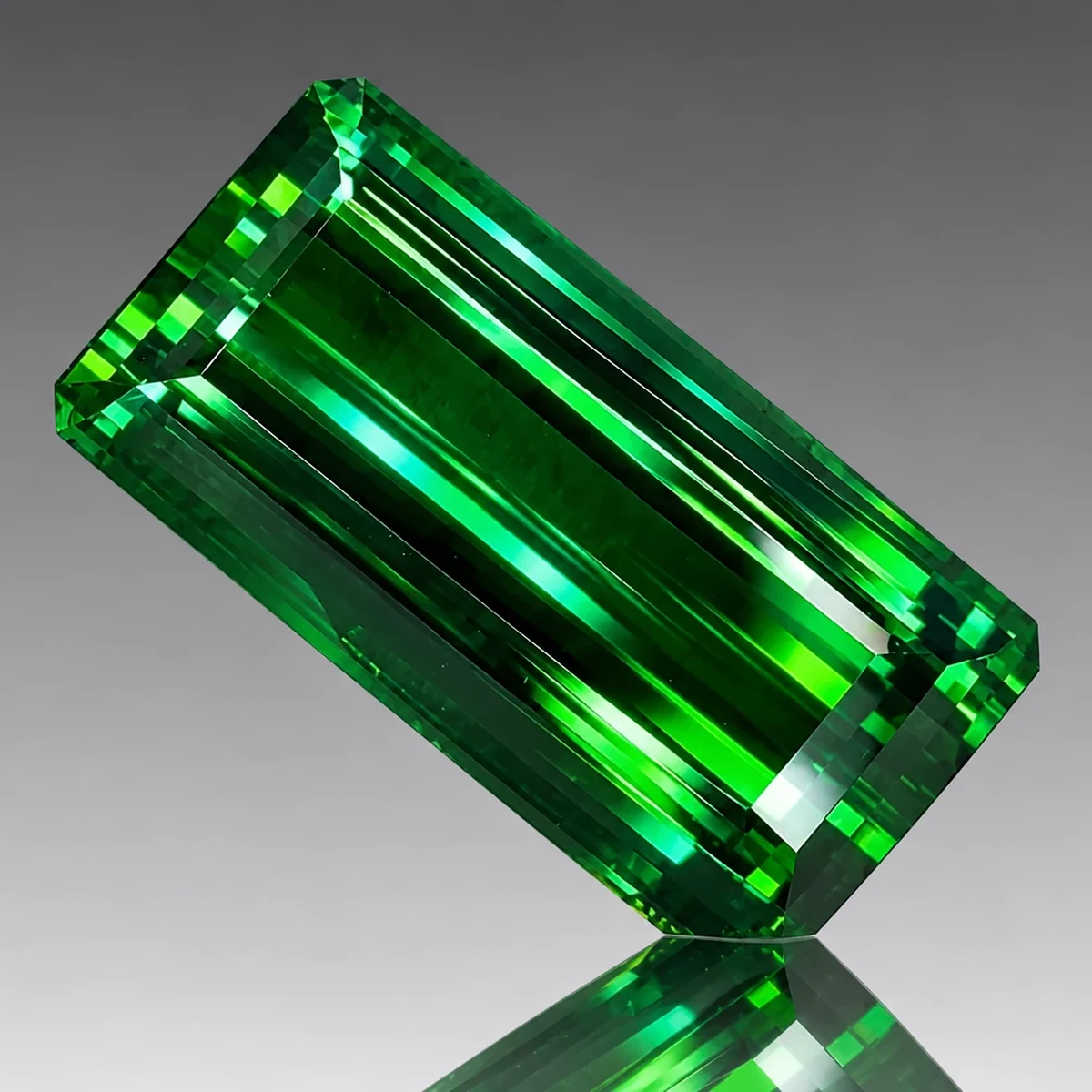
- Green tourmaline
- Iron, and possibly titanium, in verdelite. Vanadium or chromium in chrome tourmaline.
- Green zircon
- Natural colour. IGS lists green among zircon's natural colours.
- Chrome sphene
- Chromium. IGS calls it the rare intense green form.
Emerald
IGS gives emerald a hardness of 7.5 to 8 and warns that the rating does not make it durable, because inclusions make it more fragile than other beryls. It rates wearability poor to good depending on the stone.
Treatment is standard. IGS says oiling, often done under vacuum, is the industry practice and that over 90 percent of emeralds in commerce are treated. Some stones carry green oils or epoxy like resins, which need special care. Untreated certified stones can sell for up to 50 percent more than treated stones of the same size, colour and clarity.
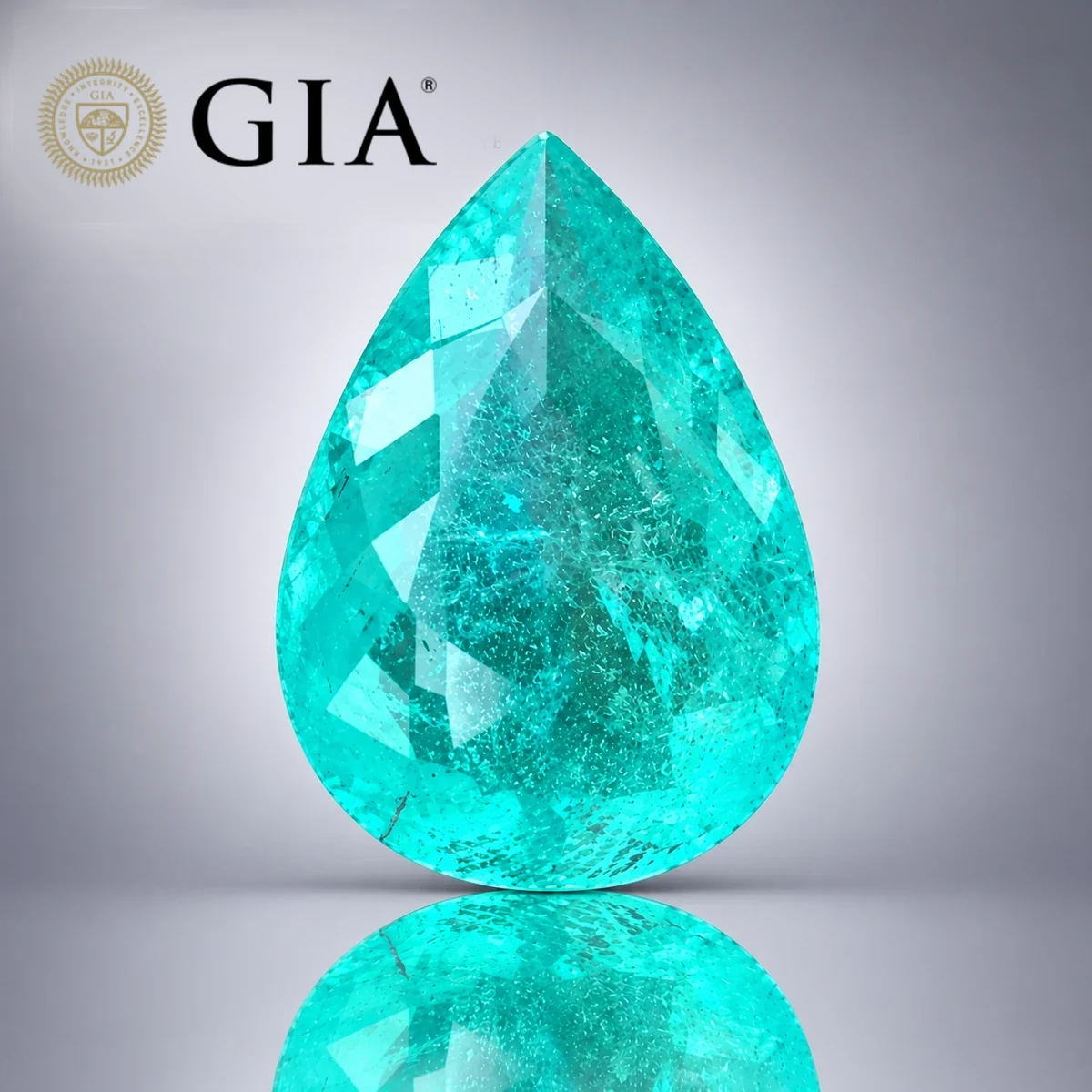
Colombia and Brazil are major producers. African sources include Zambia, Zimbabwe, Madagascar and Nigeria. Our GIA reported Nigerian emerald records no clarity enhancement.
Peridot
IGS gives peridot a hardness of 6.5 to 7. Myanmar yields the largest stones. Arizona and New Mexico produce small stones, usually under 5 carats. Pakistan is another notable source. IGS adds that most peridots are not treated.
The stone is sensitive. IGS lists scratches, stress fractures and acids, including perspiration, as risks and advises wearing peridot jewellery against the skin only occasionally. Birefringence runs from 0.033 to 0.052, and IGS notes that strong double refraction can make facet edges look doubled.
Green tourmaline
IGS defines verdelite as green tourmaline without chromium or vanadium and chrome tourmaline as deep green from chromium or vanadium. GIA adds that chrome tourmaline is intense green coloured mostly by vanadium, and that dealers also use the name for dravite and uvite stones whose colour does not come from chromium.
Hardness is 7 to 7.5 with no cleavage, which makes tourmaline the practical green stone for a ring. Most stones carry inclusions, so IGS advises against ultrasonic and steam cleaning.
Green zircon
Zircon gives a natural green without treatment. IGS records low zircon as green, brown, orange or purple, and Myanmar as a source of yellowish and greenish stones. Hardness runs from 6 to 7.5 and the stone is brittle, so facet edges chip. IGS recommends protective settings and calls pendants and earrings safer.
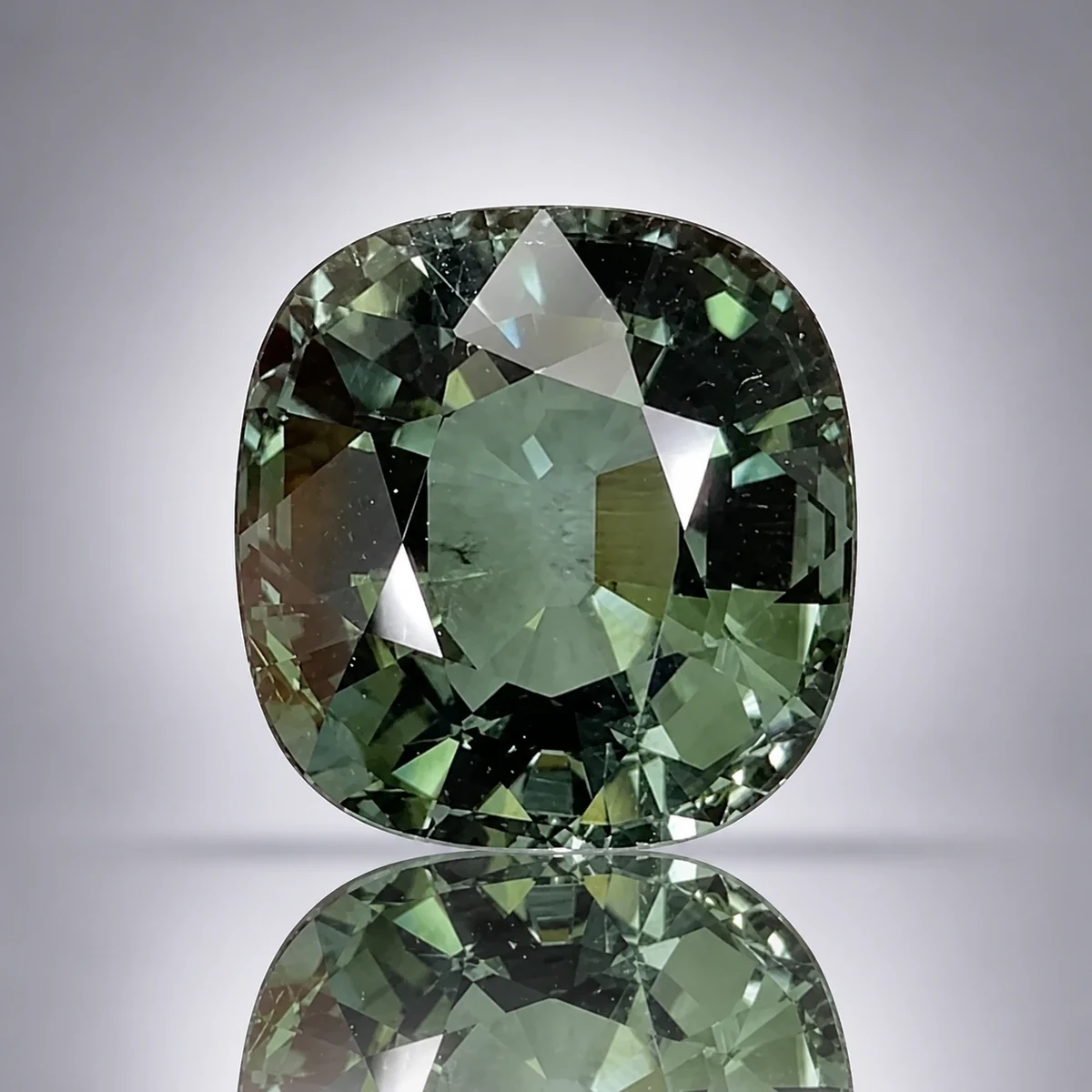
Our green zircon is a 9.45 ct cushion from Sri Lanka.
Chrome sphene
IGS says chromium produces the rare intense green of chrome sphene and that Madagascar yields green crystals. Dispersion of 0.051 gives sphene more fire than diamond according to IGS. Hardness is only 5 to 5.5 with distinct cleavage in one direction, so wear it as a pendant or earrings.
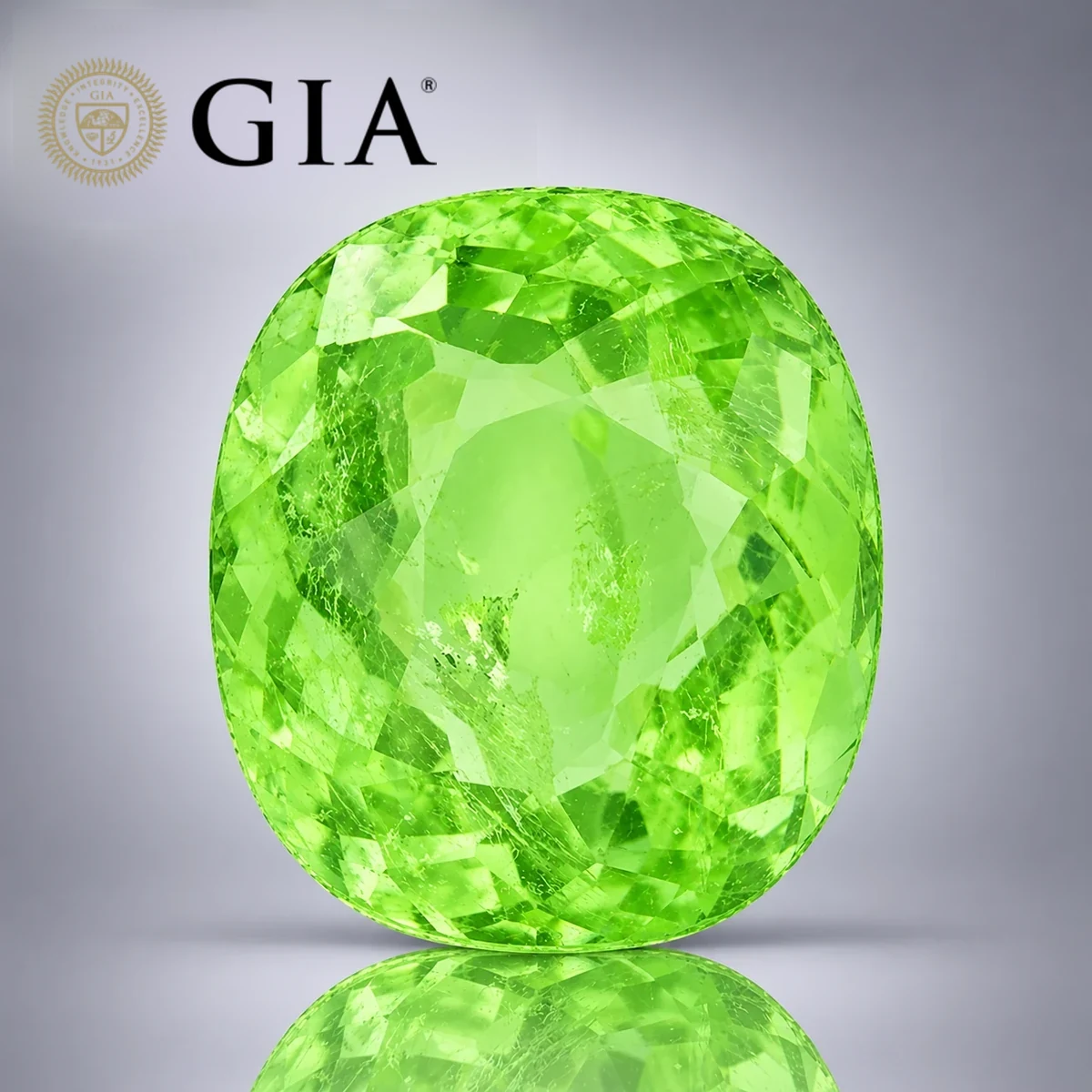
Our 13.60 ct chrome sphene oval comes from Madagascar.
What a gemmologist measures
IGS publishes the optical numbers.
- Emerald
- Refractive index 1.569 to 1.602. Birefringence 0.004 to 0.010.
- Peridot
- Refractive index about 1.650 to 1.690 for green stones. Birefringence 0.033 to 0.052.
- Tourmaline
- Refractive index 1.603 to 1.820 depending on species. Birefringence usually near 0.020.
- Zircon
- High zircon refractive index about 1.92 to 2.01. Dispersion 0.039.
- Sphene
- Refractive index 1.843 to 2.110. Birefringence 0.100 to 0.192. Dispersion 0.051.
IGS notes doubling or a fuzzy look from strong birefringence in peridot, zircon and sphene.
Size and birthstones
Size limits choice. IGS says Arizona and New Mexico peridot is usually under 5 carats and that Arizona stones over 10 carats are very rare. It says clean sphene over 5 to 10 carats is very rare and that Madagascar sphene generally cuts to about 15 carats. IGS puts emerald in clarity type III, where inclusions are nearly always present.
Emerald is the May birthstone and peridot is the August birthstone. Tourmaline is the October birthstone.
Which green to choose
- For a ring worn daily
- Green tourmaline. Hardness 7 to 7.5 with no cleavage.
- For the classic green
- Emerald, with a treatment statement and a laboratory report.
- For a clean olive to yellow green
- Peridot, worn with care.
- For maximum fire
- Chrome sphene in a pendant.
- For a lively green with a stated treatment line
- Green zircon in a protective setting.
Whatever you choose, ask for the treatment in writing and compare the dimensions as well as the carat weight. Our article on carat weight and density explains why.
Looking for a stone like this?
We keep stock in Bangkok and answer questions about grading, treatment and price without pressure.

Join the conversation
Ask a question or share what you have seen. We read every comment and reply to the good questions.
Loading comments