
What the names mean
GIA describes watermelon tourmaline as pink in the centre and green on the outside. GIA adds that crystals are typically sliced to show that pattern.
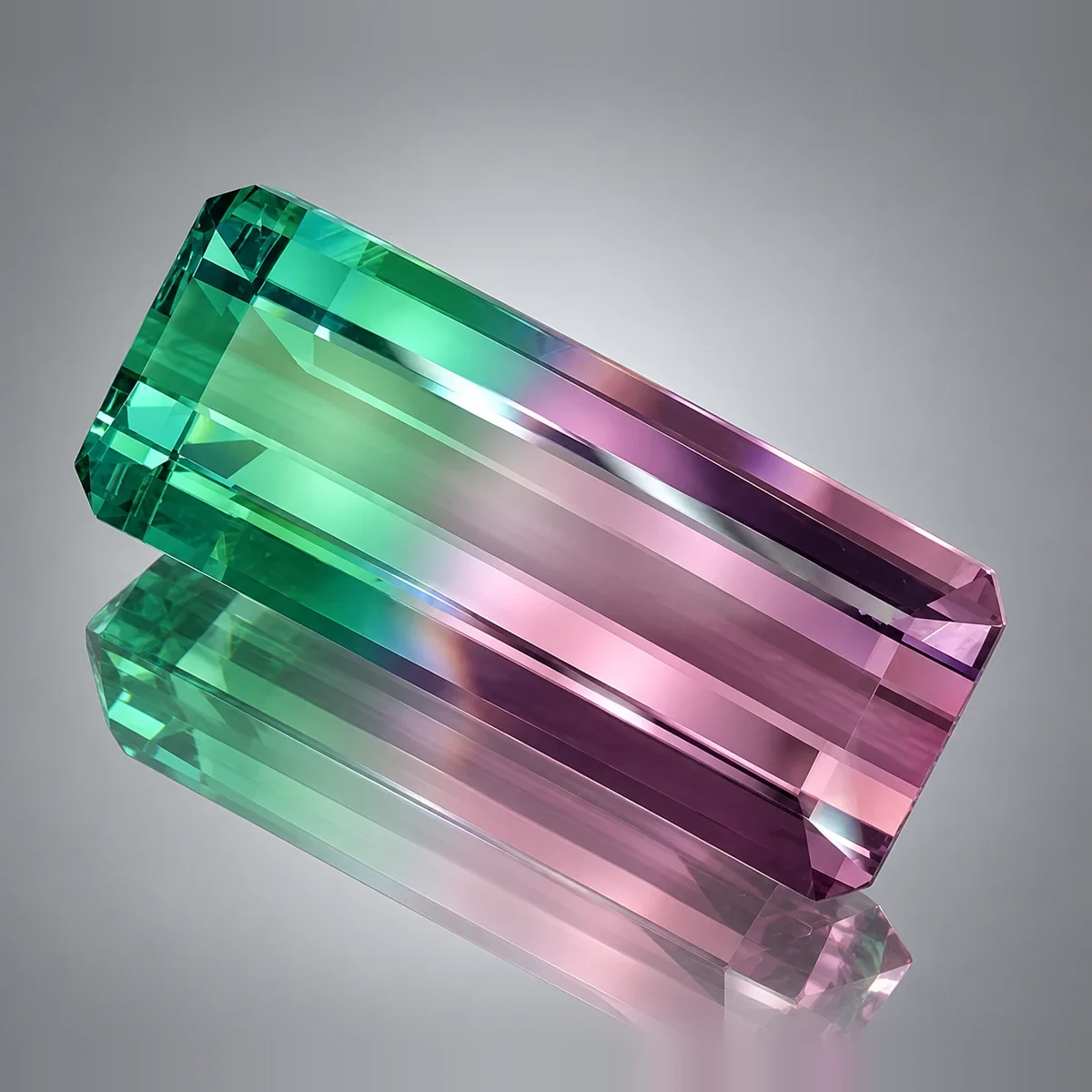
Bicolor tourmaline covers any stone with two colours in separate zones. A tricolor stone has three. The colours need not be pink and green. Our 29.37 ct octagon runs from mint green to lavender pink.
What the 2025 research found
Marie Gibson and Nancy McMillan presented a study at the Geological Society of America meeting in October 2025. They analysed nine watermelon tourmalines from eight mines in six countries. It is a conference abstract, so it has not yet gone through full journal review.
The common explanation says manganese makes the pink and iron makes the green. The numbers complicate that. Green zones held 0.74 to 4.54 weight percent manganese oxide, which is generally more than the pink zones at below detection to 1.46 percent. Iron oxide ran from below detection to 0.39 percent in pink zones and from 0.27 to 4.20 percent in green zones.
The team measured the chemical state of the manganese. Pink zones held more oxidised manganese, which supports oxidised manganese as the main cause of the pink. GIA agrees that manganese produces reds and pinks in tourmaline, and that green and blue colours trace to iron and possibly titanium.
Why the colour changes mid crystal
The authors propose a two stage model. First the pegmatite melt runs low on iron and manganese, and natural radiation pushes the conditions toward oxidising, which favours pink elbaite. Then the pocket ruptures and reduced fluids carrying iron and manganese flood in. They dissolve existing crystal faces and grow a greener, iron richer rim.
Reverse zoning, with a green core and a pink rim, links to later fluids rich in silicon and aluminium. The practical point for buyers is simple. The colour boundary records a real event in the crystal's growth. It is not a coating or a treatment.
How cutters show the colour
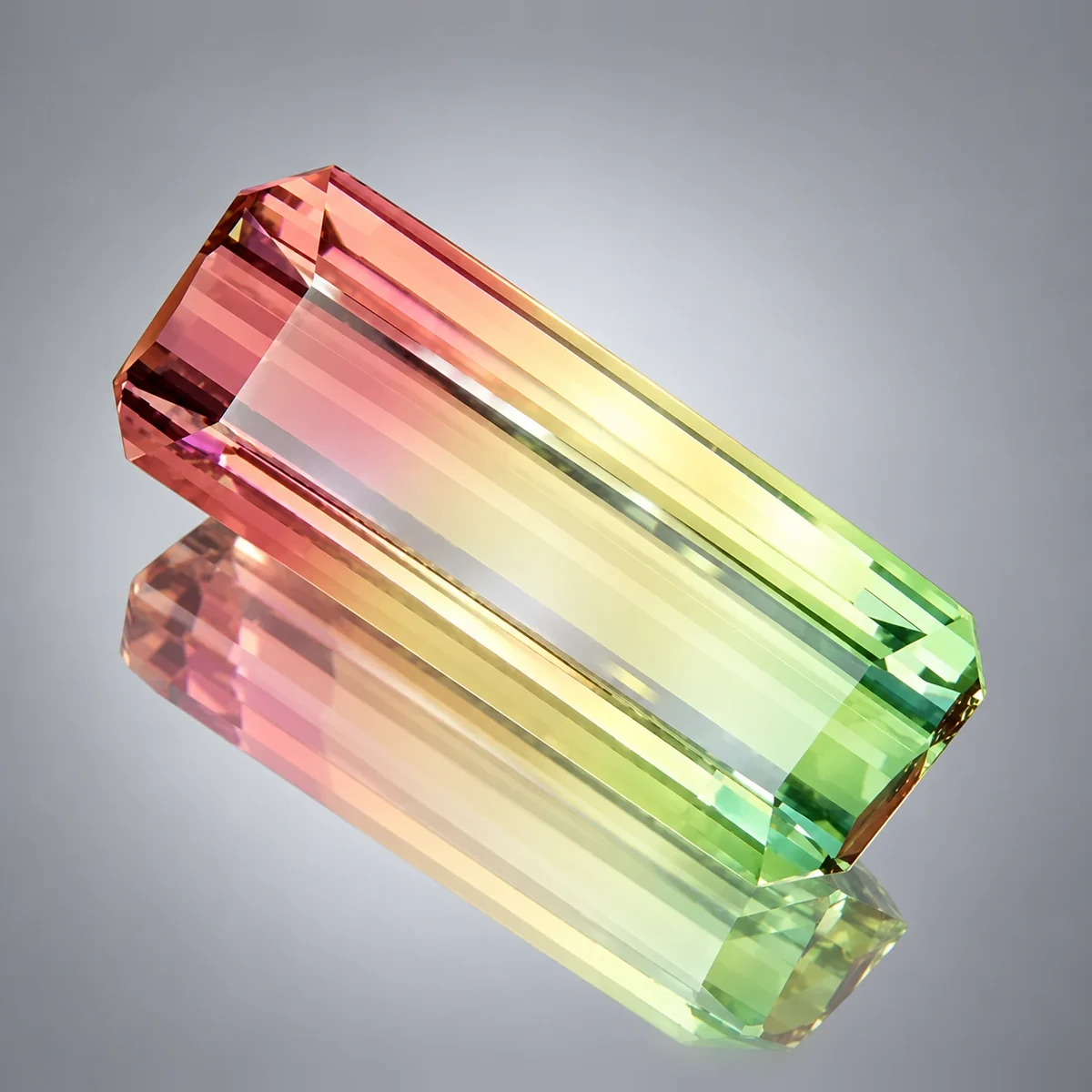
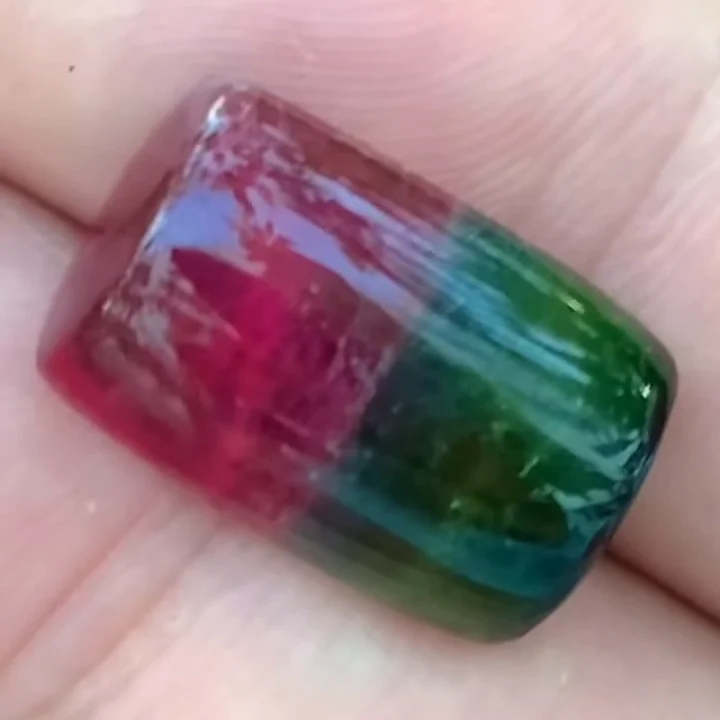
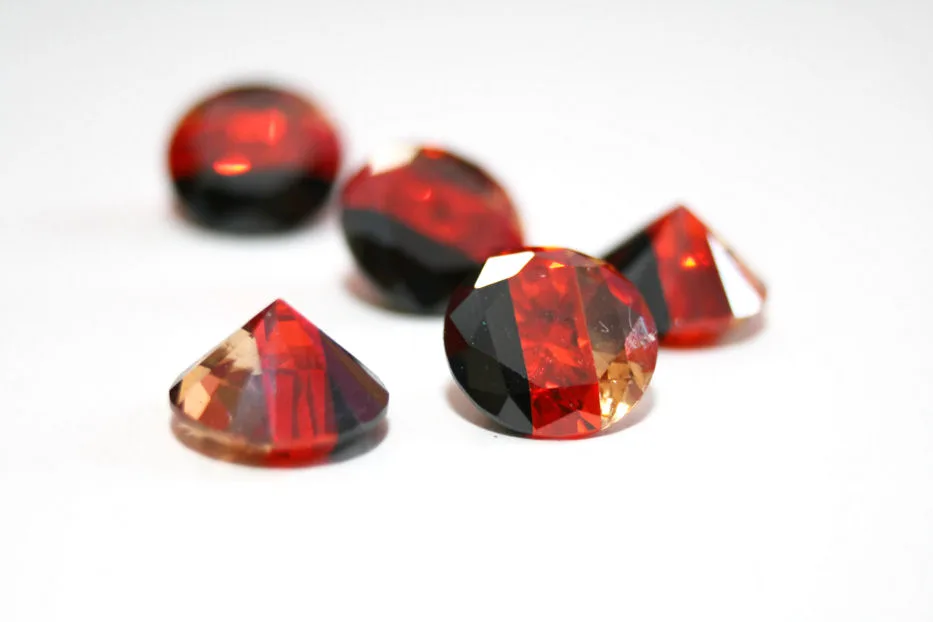
The cutter decides how the zones appear. A slice cut across the crystal shows the core and rim as rings. A long step cut lays the colours out in ordered bands, and a cabochon shows them as blocks of colour side by side.
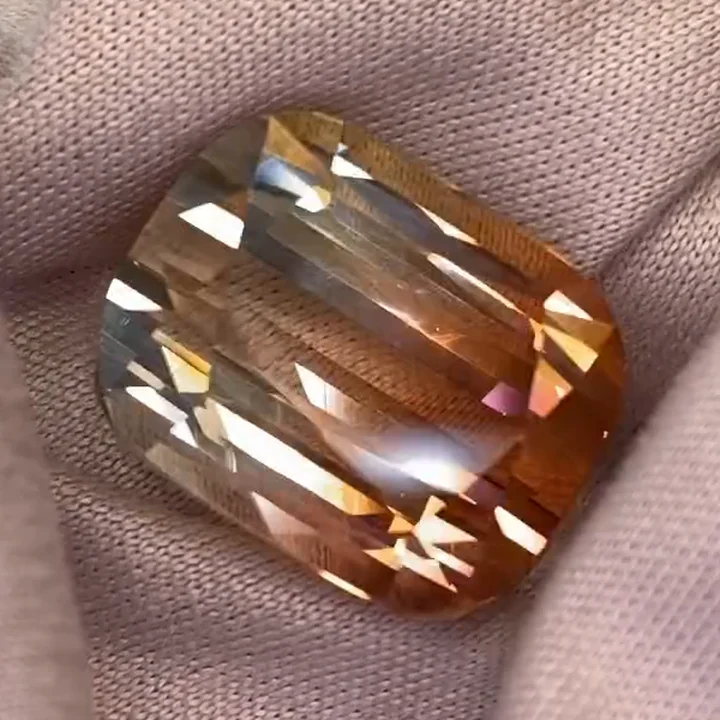
We hold stones in several styles. They include a 29.37 ct bicolor octagon from Brazil, a tricolor watermelon from Mozambique and a 24.42 ct watermelon cabochon from Brazil. The octagon is loupe clean and carries no treatment of any kind.
Treatment and what to ask
GIA states that some pink and yellow elbaite owes its colour to radiation induced colour centres, which can form naturally or in a laboratory. A 2016 study by Apichate Maneewong and colleagues heated two pink Afghan tourmalines at 600 degrees Celsius and both lost their colour. A green Nigerian sample in the same test did not change under heat or electron beam irradiation.
Those results come from three separate stones, not a bicolor crystal. They show that pink and green can respond differently to treatment, so the question matters for every two colour stone.
Ask whether the stone is heated or irradiated and ask for the answer in writing. Then judge the stone itself. Look for a clean boundary or a smooth blend, whichever you prefer, and check that the pattern sits where the cutter intended. Look in daylight.
Looking for a stone like this?
We keep stock in Bangkok and answer questions about grading, treatment and price without pressure.

Join the conversation
Ask a question or share what you have seen. We read every comment and reply to the good questions.
Loading comments