
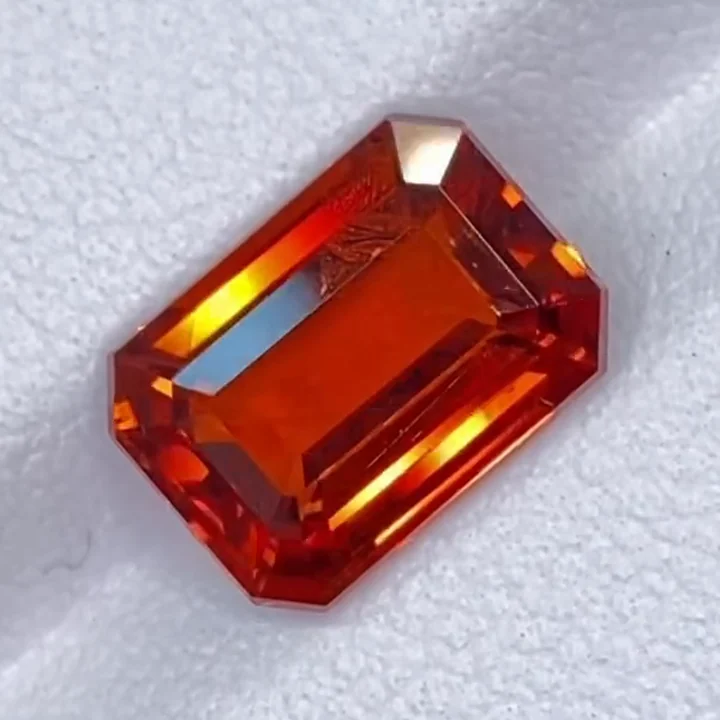
A find on the Kunene River
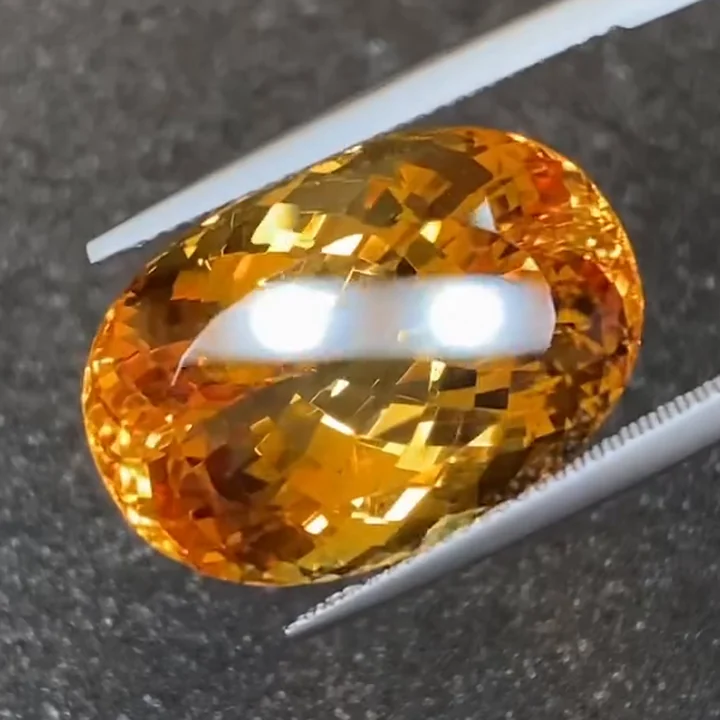
ICA dates the discovery of mandarin garnet to 1991. Miners found the crystals in northwest Namibia along the Kunene River, on the border with Angola. The garnets sat in mica and mica schist.
The International Gem Society (IGS) places the find in the Marienfluss area of the Kunene Region and states that Namibia was the only source in the mid 1990s.
The supply did not last. ICA reports that the mine ran out after a short time and that digging deeper cost too much to continue.
Nigeria and Tanzania take over
Nigeria became the main source. The two organisations give different starting dates. ICA says orange spessartine from a river bed mine in southwest Nigeria, near Benin, appeared in the trade around April 1994. IGS says Nigeria began producing gem quality spessartite in 1998. Both agree on the result. ICA says Nigerian stones come close to the Namibian orange.
Tanzania added a third source in 2007, with orange spessartite found near Loliondo and Serengeti National Park, according to IGS.
IGS also gives the chemistry of each source. The numbers are mol percent of the garnet end members.
- Namibia, mid 1990s average
- 85% spessartite, 12.5% pyrope and 2.5% grossular.
- Nigeria, gem quality
- 95% spessartite.
- Tanzania
- 77.5% spessartite, 17.9% pyrope and 4.6% grossular.
IGS states that high manganese gives spessartite its orange. Nigerian stones carry the highest share of the manganese end member.
The numbers behind the stone
IGS lists the properties for spessartite. The formula is Mn3Al2Si3O12.
- Hardness
- 7 to 7.5 on the Mohs scale.
- Refractive index
- 1.789 to 1.797.
- Specific gravity
- 4.09 to 4.15.
- Dispersion
- 0.027.
- Optics
- Single refractive, in the cubic crystal system.
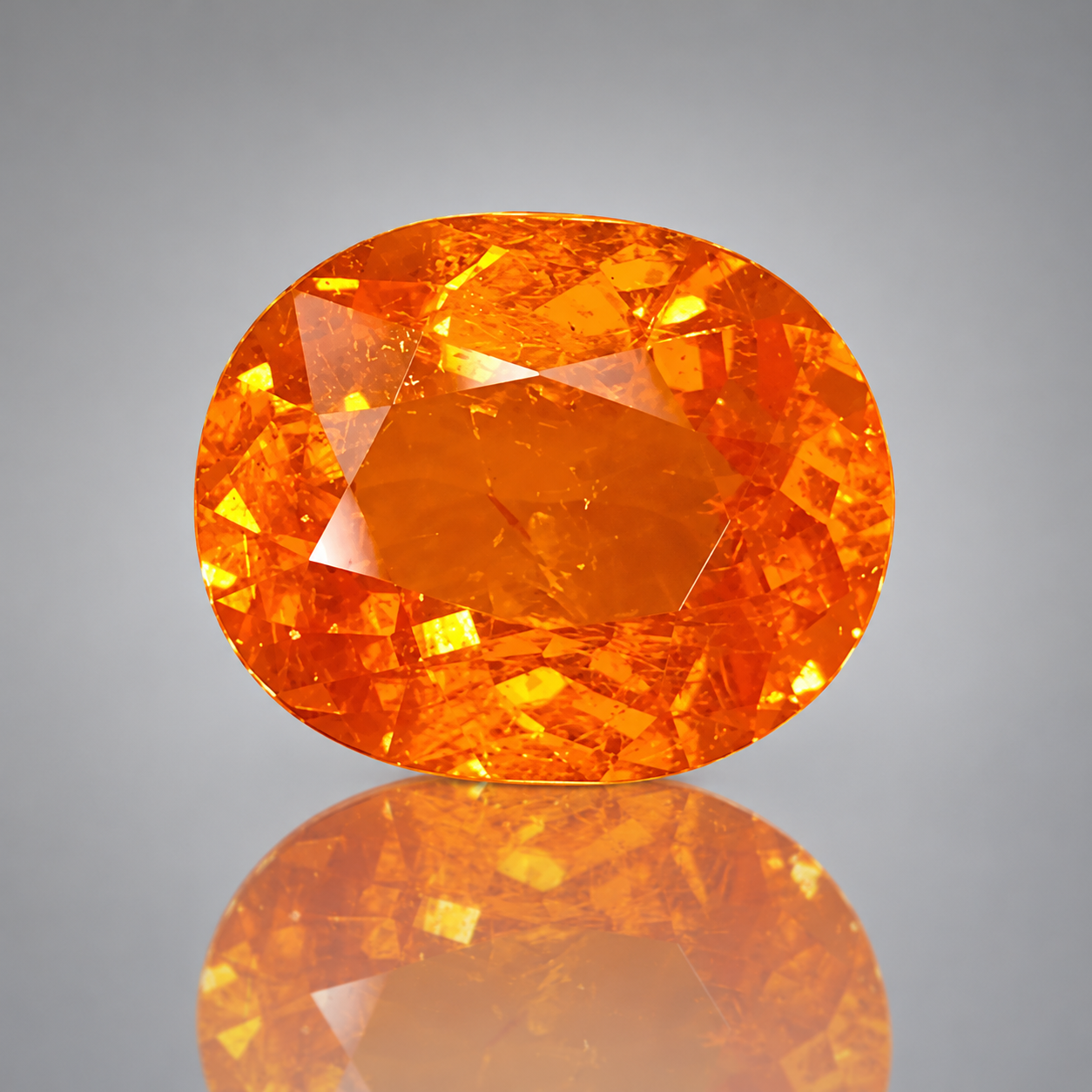
ICA describes the refractive index as very high and credits it for the unusual brilliance. Spessartite is the birthstone for January.
What to call it
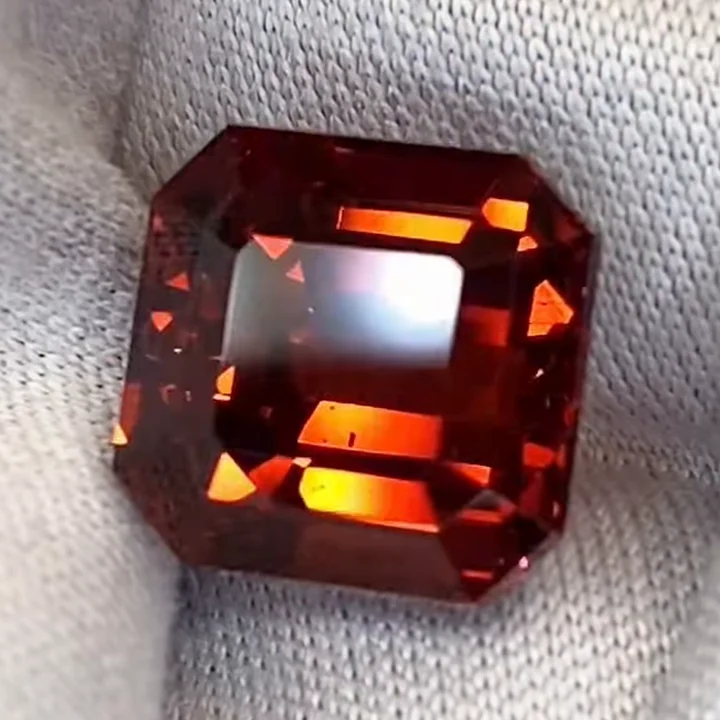
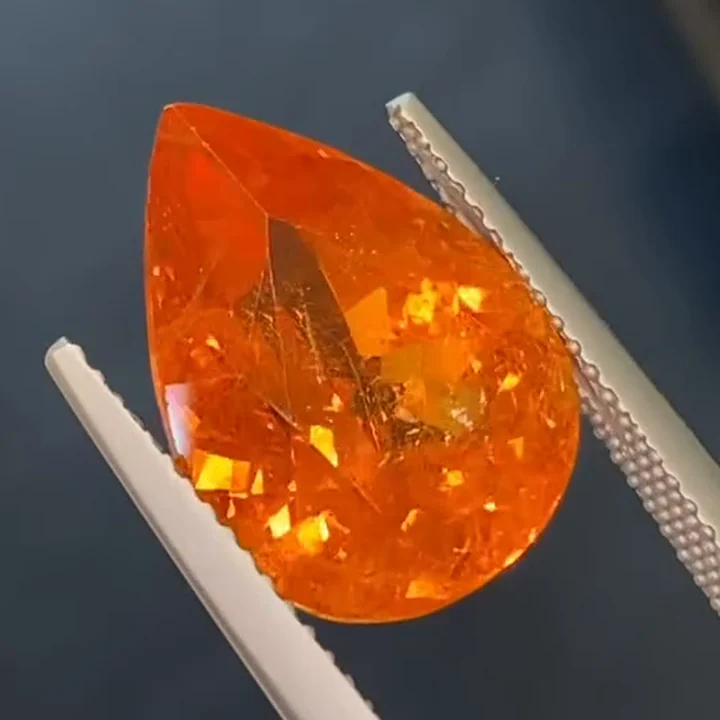
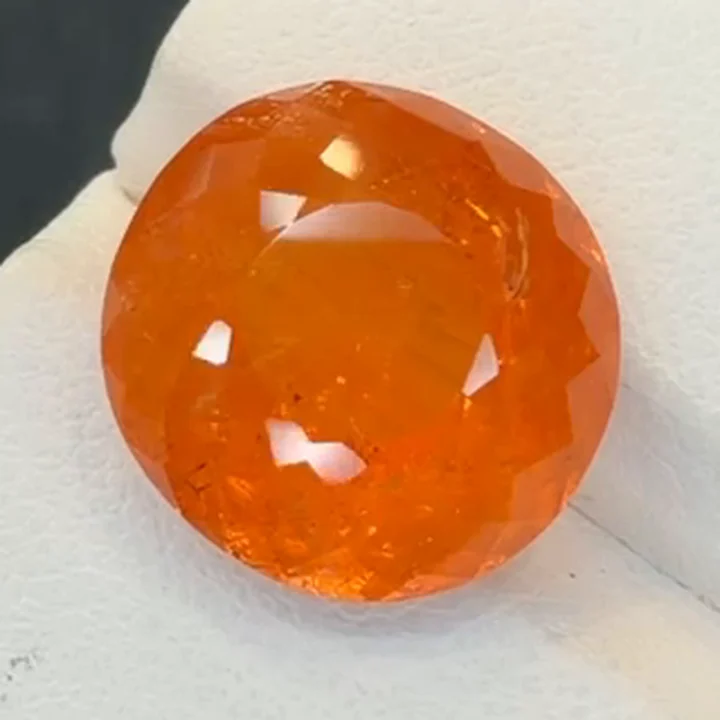
Early trade names were hollandine and Kunene spessartine. Mandarin garnet became the name that stuck, and IGS notes that dealers use it two ways. Some apply it to the vivid orange Namibian stones only. Others apply it to any spessartite of that colour.
Neither use is wrong. Ask the seller which one they mean, then judge the colour in the stone in front of you.
Clarity, size and treatment
IGS lists the common inclusions as curved fibres, round and angular quartz crystals, fibrous amphibole, barite and oxide minerals. Eye clean stones exist. IGS describes a 14.77 ct triangular mixed cut as eye clean.
Size is the hard part. IGS calls stones over 10 carats extremely rare. It cites a 29.77 ct cushion shown by Colgem at the 1995 Tucson show and a 39.35 ct stone set in a ring at the Houston Museum of Natural Science.
Spessartite does not normally receive treatment. IGS reports that no synthetic mandarin garnet exists. The simulants are orange glass and orange YAG.
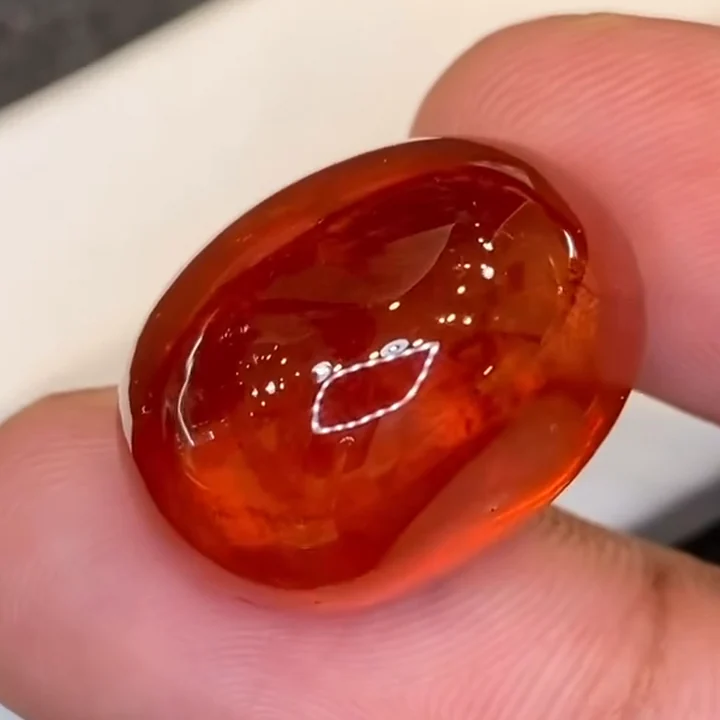
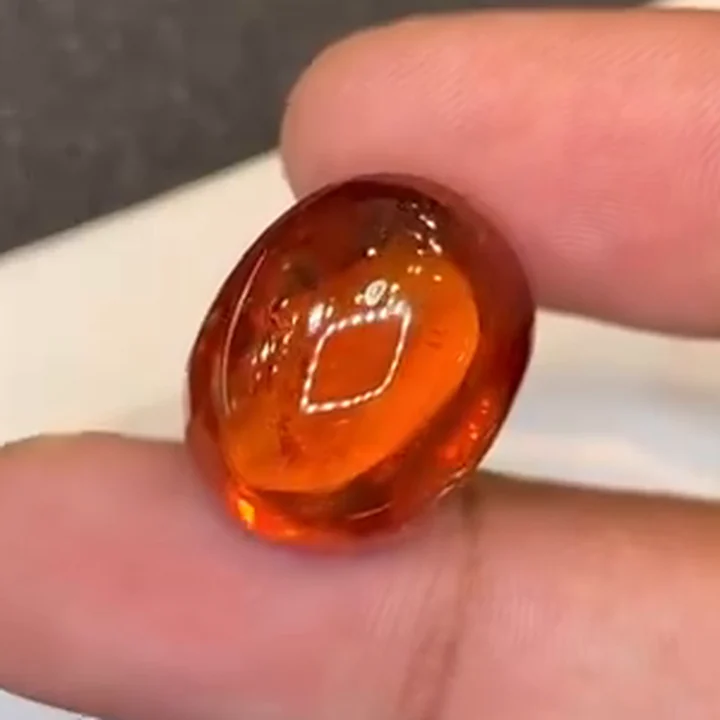
Most of the spessartite we sell comes from Nigeria, with one Namibian stone in the mix. Sizes run from about 4 carats to a 44 carat cabochon.
Looking for a stone like this?
We keep stock in Bangkok and answer questions about grading, treatment and price without pressure.

Join the conversation
Ask a question or share what you have seen. We read every comment and reply to the good questions.
Loading comments