
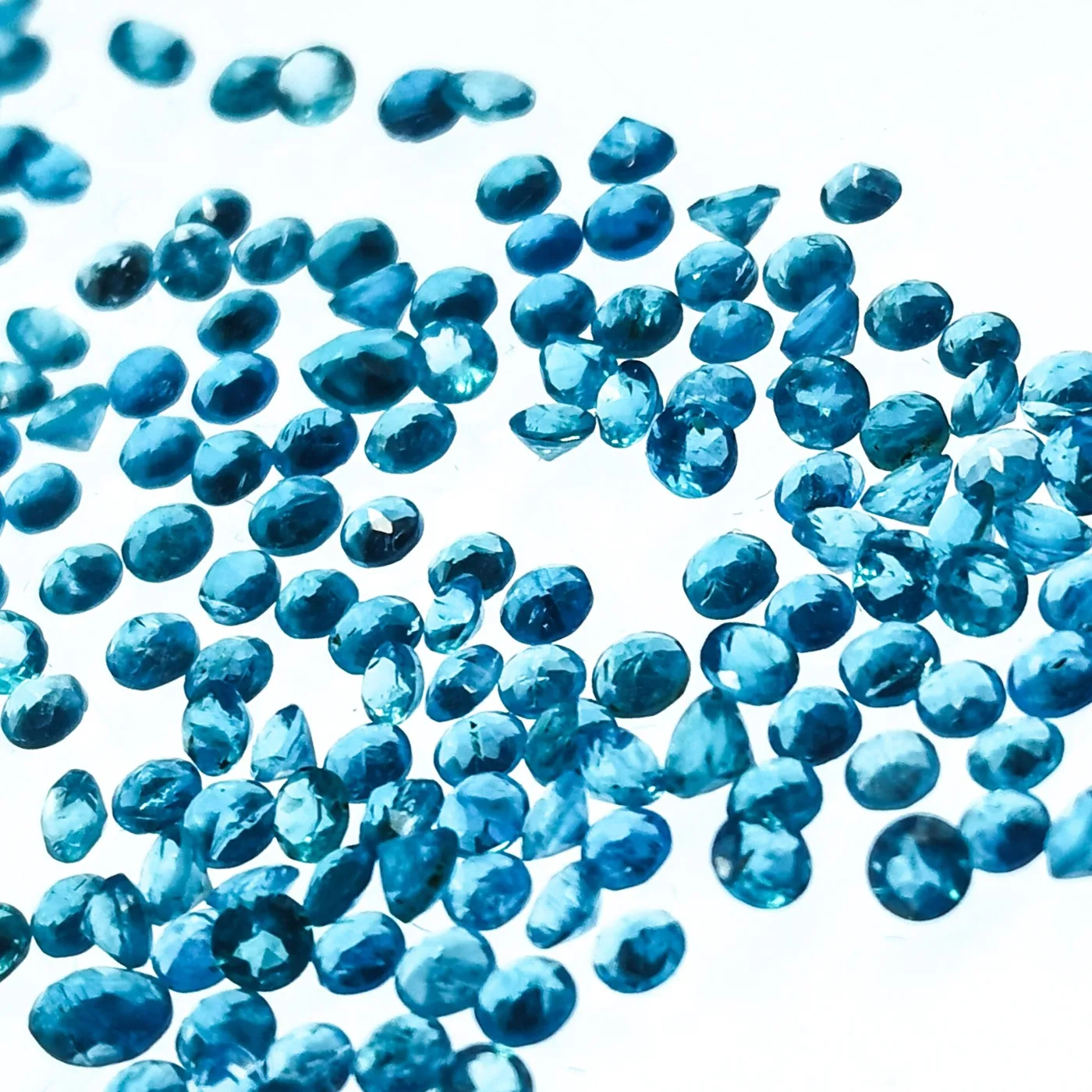
Why neon blue confuses buyers
A phone photograph flattens colour. A saturated blue aquamarine, a blue apatite and a paraiba tourmaline can look identical on a screen. In the hand they separate fast, in weight, in hardness and in how the colour behaves in different light.
The International Gem Society (IGS), GIA and the International Colored Gemstone Association (ICA) give the facts for each. This guide puts them side by side.
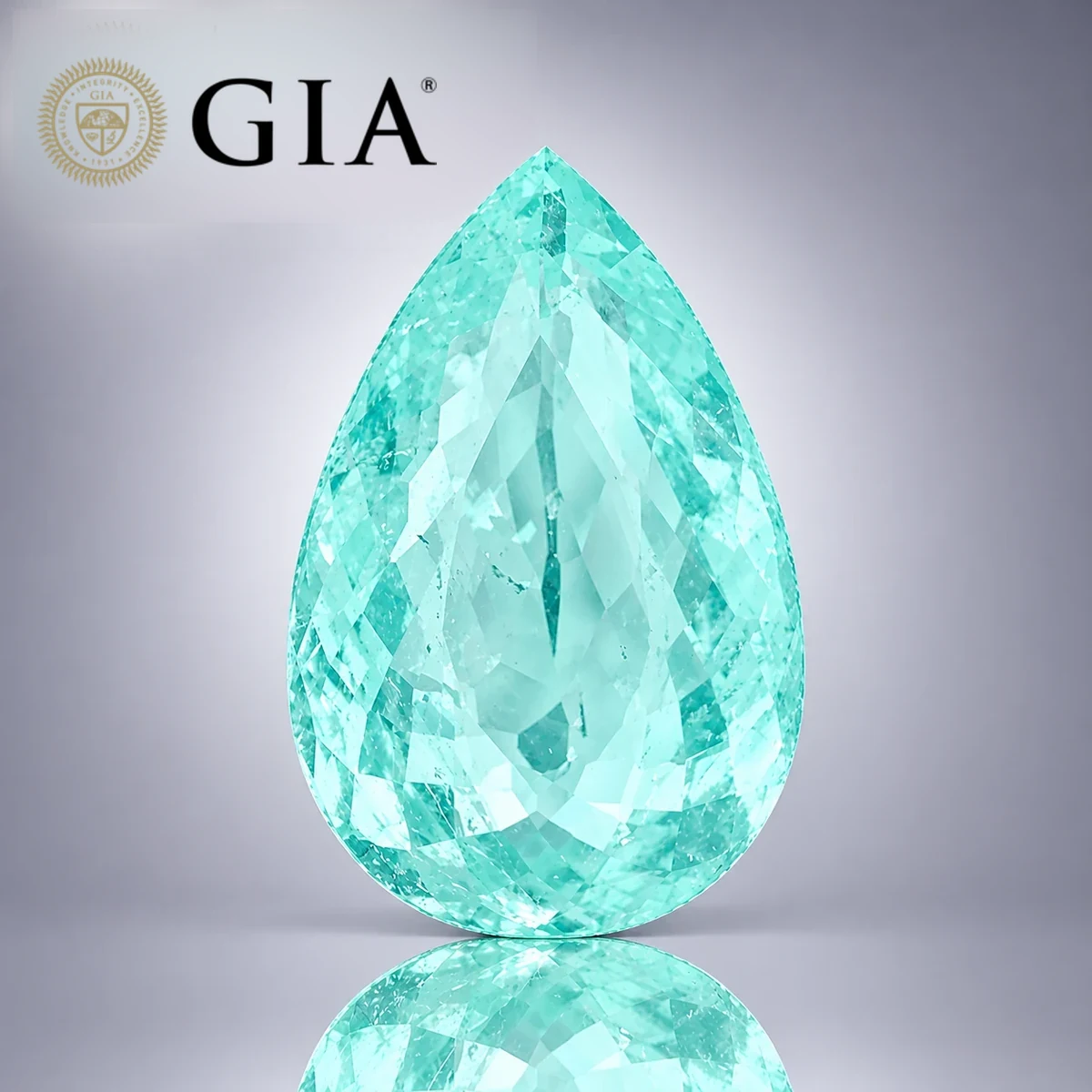
Paraiba tourmaline
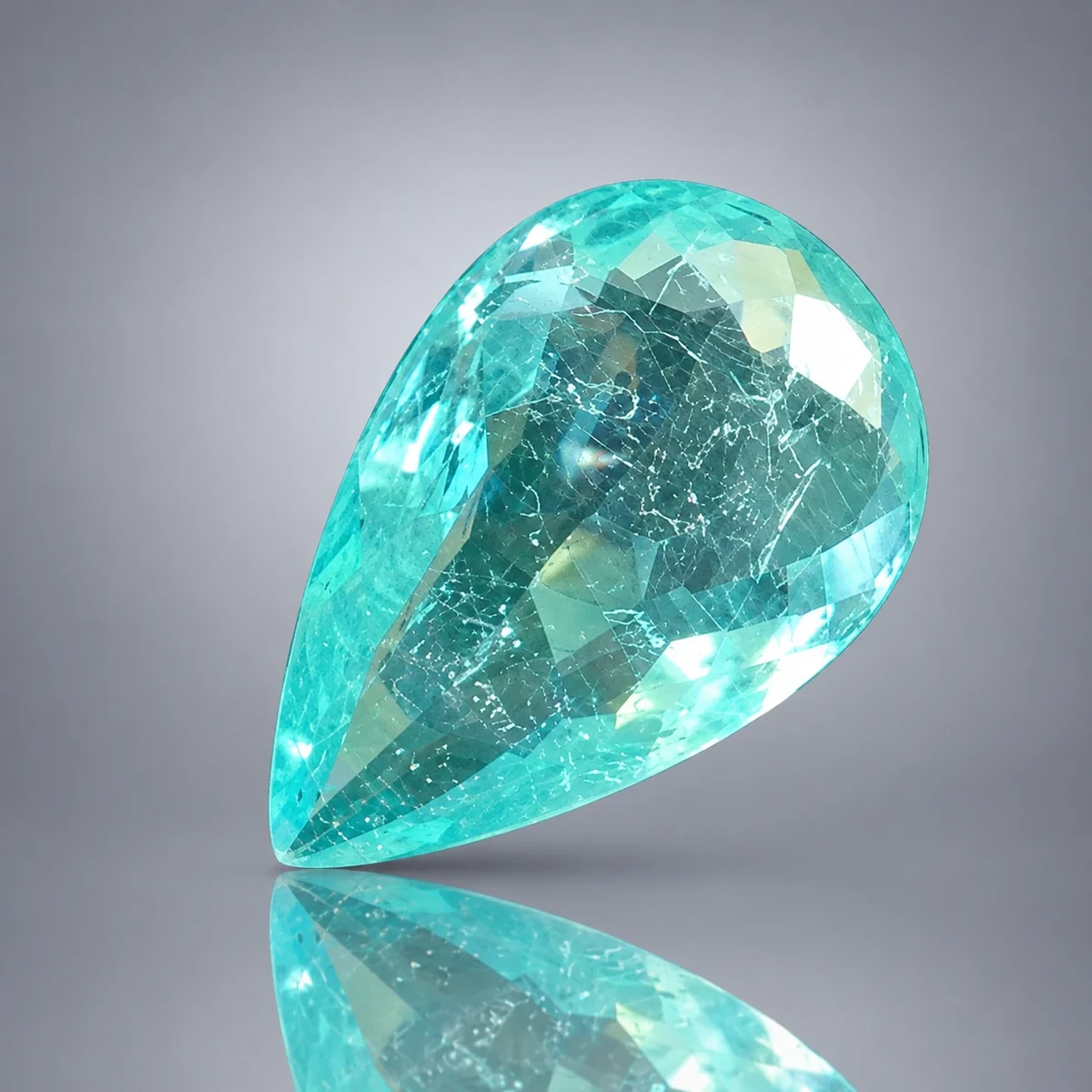
Copper makes the colour. ICA reports that copper produced the blue, turquoise and green of the first Brazilian stones in 1989 and that nobody had seen copper colour tourmaline before. Manganese often sits in the same crystal and adds violet and red tones, so cutters heat the stone to remove them.
Nigeria produced copper tourmaline from early 2001, according to ICA. Mozambique followed, and GIA documented the material in Gems & Gemology in 2008. IGS gives tourmaline a hardness of 7 to 7.5 with no cleavage.
ICA states that fine, large paraiba reaches five figures per carat. Our history of paraiba tourmaline covers the sources in full.
Blue apatite
Apatite is the stone most often sold as a cheaper neon blue. IGS gives it a hardness of 5 at best and poor cleavage. Refractive index runs from 1.598 to 1.667 across the species.
IGS names Madagascar as the source of neon blue green stones and Brazil, Myanmar and Sri Lanka as sources of blue. Heating can improve the colour, especially in blue and blue green stones, and apatite is very heat sensitive.
Wear is the catch. IGS rates the wearability poor and calls the stone brittle and sensitive to acid, heat and shock. It advises protective settings and occasional wear for rings, and it calls earrings and pendants safer. The name comes from the Greek apatein, to deceive, because mineralogists once confused apatite with other minerals.
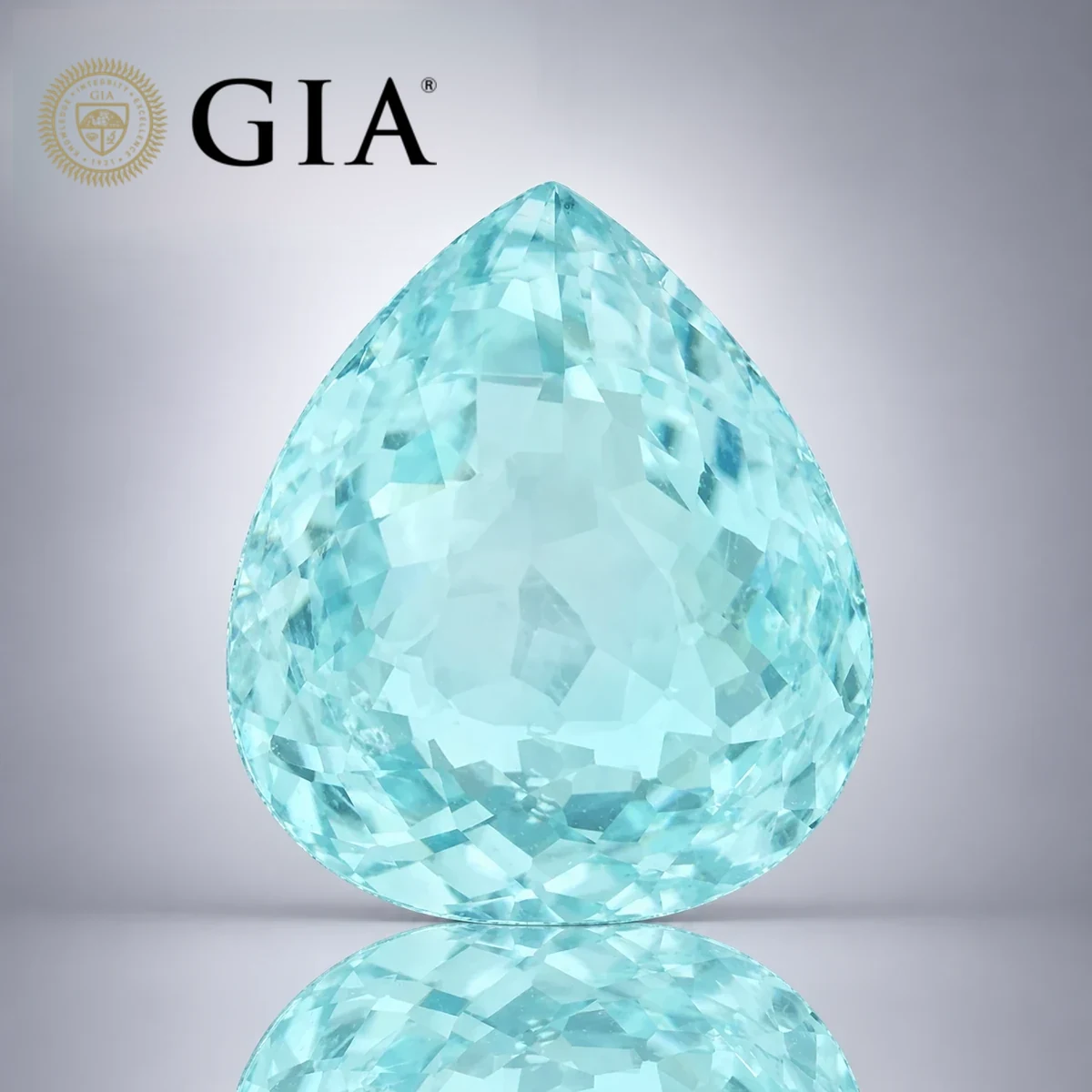
Aquamarine
Trace ferrous iron makes aquamarine blue to blue green. IGS gives hardness as 7.5 to 8, refractive index 1.567 to 1.590 and dispersion 0.014, and it rates wearability excellent.
Heating to about 375 degrees Celsius removes the green tint and leaves blue. IGS calls this treatment very common and undetectable. Graders describe a pure blue stone as probably heat treated.
IGS names Brazil as the major source of fine stones, with Nigeria (Jos), Mozambique and Madagascar among the others. Aquamarine is the March birthstone.
Indicolite
Indicolite is the tourmaline trade name for blue stones coloured by something other than copper. GIA says iron and possibly titanium produce green and blue colours in tourmaline.
GIA's 2017 report on Nigeria describes indicolite and green tourmaline from Kwara State, and states that the first indicolite production sent to Bangkok ran in crystals from 2 to 34 grams. Indicolite shares the hardness of other tourmalines.
Do not accept the name paraiba for a blue tourmaline without a laboratory report that names copper.
Blue zircon
IGS says nearly all blue zircon is heat treated and that the treatment is undetectable. Cambodia is the main source of blue and colourless stones. Dispersion is 0.039, which gives blue zircon strong fire, and hardness runs from 6 to 7.5.
IGS adds a warning. The colour of heated blue zircon is less stable to light than heated green or yellow. IGS also describes zircon as brittle, so protective settings help.
What a gemmologist measures
A laboratory separates these stones with numbers. IGS publishes the ranges.
- Refractive index
- Aquamarine 1.567 to 1.590. Apatite 1.598 to 1.667. Tourmaline 1.603 to 1.820 depending on species. High zircon about 1.92 to 2.01.
- Specific gravity
- Aquamarine 2.66 to 2.80. Apatite 3.10 to 3.35. Tourmaline 2.82 to 3.9 depending on species. Zircon 3.95 to 4.80 across its types.
- Dispersion
- Aquamarine 0.014. Tourmaline 0.017. Zircon 0.039.
- Birefringence
- Aquamarine 0.005 to 0.007. Apatite 0.001 to 0.013. Tourmaline 0.006 to 0.080 and usually near 0.020.
A laboratory reads several of these numbers together and adds chemistry on top. You cannot run those tests at home, so the report does the work for you.
Clarity and care
IGS lists the typical inclusions in aquamarine as long hollow tubes, negative crystals and chrysanthemum like features, and it says transparency runs from opaque to transparent. Inclusions can make stones sensitive to ultrasonic and steam cleaning. A soft brush, mild detergent and warm water are the safe choice.
The same advice applies to tourmaline. IGS notes that tourmaline attracts dust and that most stones carry inclusions. It tells apatite owners to avoid mechanical cleaning systems and to store the stone as they would store opal. It warns against ultrasonic cleaners for zircon.
Side by side
The table below pulls the numbers together.
- Paraiba tourmaline
- Colour from copper. Hardness 7 to 7.5. No cleavage. Usually heated.
- Blue apatite
- Hardness 5 at best. Brittle and heat sensitive. Best in earrings and pendants.
- Aquamarine
- Colour from iron. Hardness 7.5 to 8. Excellent wearability. Usually heated to remove green.
- Indicolite
- Blue tourmaline without copper, coloured by iron and possibly titanium. Hardness 7 to 7.5.
- Blue zircon
- Nearly always heated. Hardness 6 to 7.5. Brittle. Strong fire.
How to avoid the wrong stone
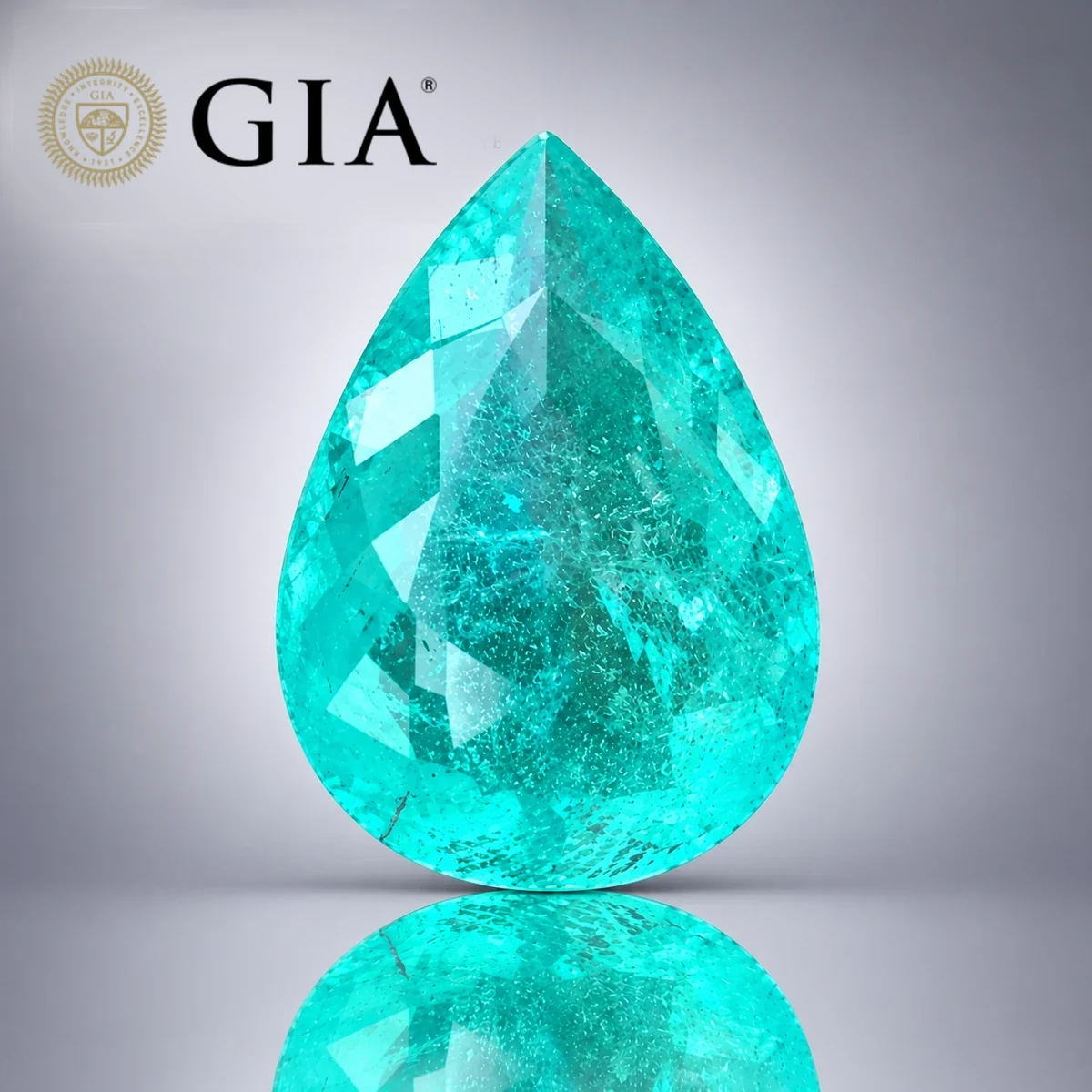
Ask for a laboratory report and read the variety line. A real paraiba report names copper bearing tourmaline. The origin line is separate and drives most of the price gap, as our article on GIA origin reports explains.
Ask about treatment in writing. Heating is routine for paraiba, aquamarine and blue zircon, and a good seller says so plainly.
Think about how you will wear the stone. Choose paraiba or aquamarine for a ring. Choose apatite for earrings or a pendant.
Most of our paraiba tourmaline carries a GIA report, and every listing states weight and treatment.
Looking for a stone like this?
We keep stock in Bangkok and answer questions about grading, treatment and price without pressure.

Join the conversation
Ask a question or share what you have seen. We read every comment and reply to the good questions.
Loading comments