
What makes an emerald an emerald
Emerald is a mineral called beryl. Aquamarine, morganite and heliodor are beryl too. Trace elements decide which one you get. Chromium and vanadium turn beryl green, and a beryl coloured that way is emerald.
That colour is harder to produce than it sounds. Beryllium, the element that builds beryl, collects in granite pegmatites. Chromium and vanadium sit in dark rocks deep in the crust. The two groups rarely meet. Emerald forms only where they do, which explains why fine emerald is scarce everywhere.
Iron changes the picture. It pulls the green toward blue or yellow, and it can dull the colour. Emeralds from different countries carry different amounts of these elements, so they look different. Nigerian stones show that clearly.
Where Nigerian emerald comes from
Emerald deposits occur across Nigeria. Kaduna State and Nasarawa State are the names you hear most, and reports also point to the Jos Plateau and Taraba. GIA notes that facet grade material, meaning crystal clean enough to cut, comes from a limited area in Nasarawa State.
Nigeria is the only country in West Africa with commercial emerald deposits. Its output is small and irregular next to Colombia, Zambia, Brazil and Zimbabwe. Most mining is artisanal. Miners work by hand, sell to local buyers and the rough travels from there.
The rocks tell a useful story. Researchers found that emerald growing close to a pegmatite carries much more chromium and shows a deeper green. Emerald farther away is paler. A single deposit produces a wide spread of colour for that reason.
Nigeria also produces the rest of the beryl family, including aquamarine, morganite, heliodor and plain green beryl. Its dealers work with rubellite tourmaline and sapphire as well. Emerald is one part of a bigger gem trade.
The colour of Nigerian emerald
Most Nigerian emerald sits between light green and medium green. Some crystals show a bluish tint, and stones from Gwantu in Kaduna State have been described as blue green. Researchers link the blue to iron, while chromium and vanadium supply the green.
That colour differs from a fine Colombian emerald, which shows a deep, warm, pure green. It also differs from Zambian emerald, which tends toward a cooler, bluer green. Nigerian stones rarely match either. They offer a fresher, lighter green.
Judge the stone in daylight. Light green stones lose colour quickly in weak light, and a photograph often hides that. Ask for a video by a window, then decide.
Emerald or green beryl?
This question matters most with Nigerian material. Green beryl and emerald are the same mineral. The difference is colour, and no single rule fixes where one ends and the other starts.
Laboratories draw the line in different places. One lab calls a pale stone emerald while another calls the same stone green beryl. Traders argue about it constantly. The name affects price, because emerald sells for much more than green beryl of the same size.
Protect yourself with the report. A good lab report states the species and the variety. If the stone is pale, ask what the report calls it and ask how the seller priced it. A fair seller prices a pale stone as what it is.
Clarity and the garden inside
Emerald belongs to the third clarity type in GIA's system, the group that nearly always carries inclusions. Buyers call the internal world of an emerald its jardin, the French word for garden. It holds fractures, small crystals, gas bubbles and liquid filled cavities.
Reports on Nigerian clarity disagree. Some describe stones that are cleaner than Colombian emerald, and others describe heavily included material. Both are true, because quality varies from crystal to crystal. Judge each stone on its own.
Look at how the inclusions sit. Fractures that reach the surface matter most because they weaken the stone. A small crystal deep inside costs you less than a crack near the edge.
Cutting Nigerian emerald
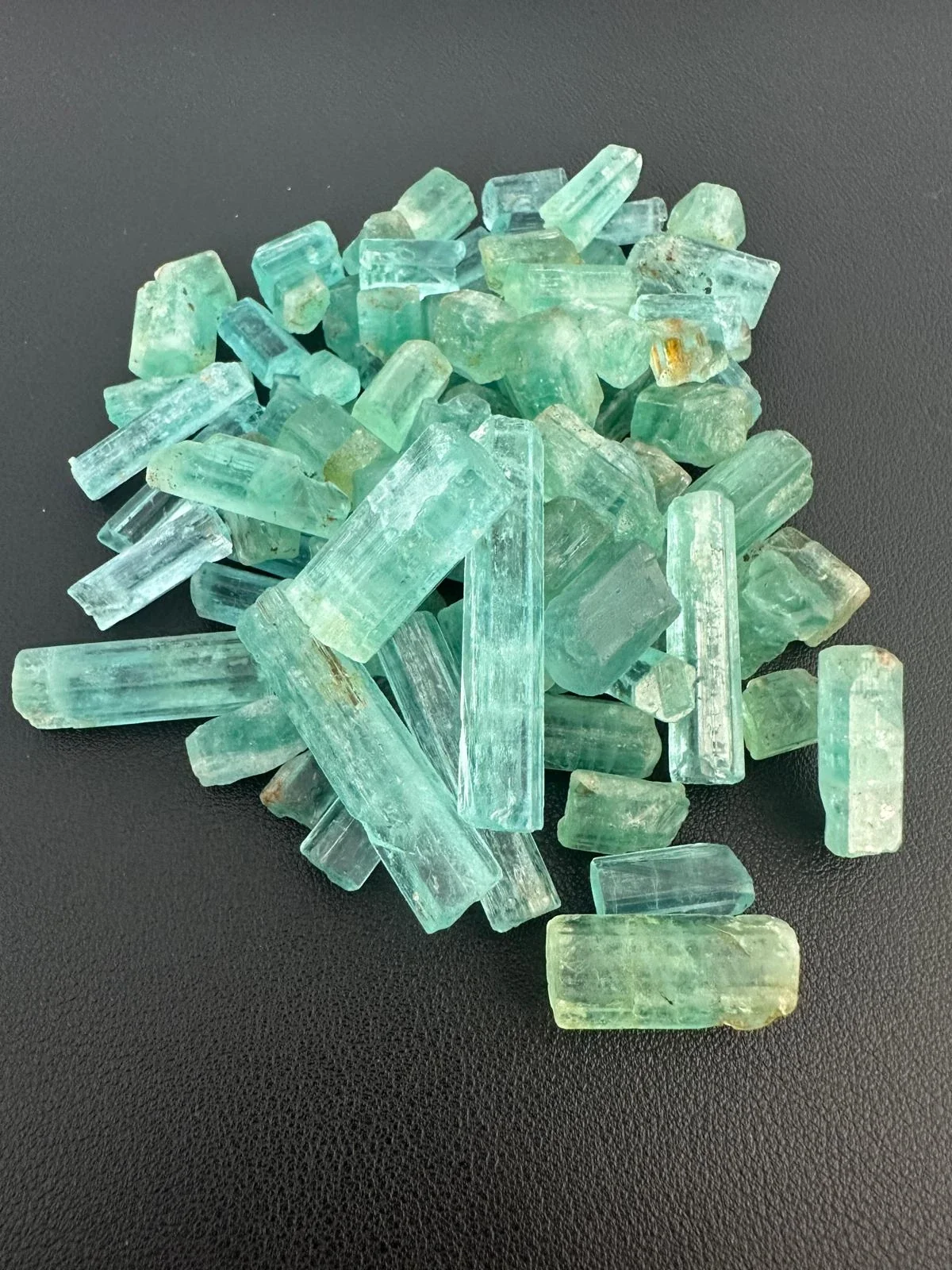
The rough crystals grow as six sided prisms, the shape you see in the photo. Cutters follow that shape. The classic emerald cut is a rectangle with trimmed corners and long, flat facets. It shows colour well and protects the corners, which chip first.
Emerald rates 7.5 to 8 on the Mohs scale, yet it breaks easily. The many fractures inside make it brittle. A hard knock chips an emerald that would survive a scratch. That is why cutters treat it gently and why jewellers protect the corners in a setting.
Large, clean, well coloured Nigerian emeralds are scarce. Most finished stones are small to medium. Expect a choice of pleasant lighter stones and very few big ones.
Treatment and care
Almost all emerald is treated. Cutters fill surface reaching fractures with oil or resin to make them less visible. The practice is old and accepted in the trade, but the seller must disclose it.
- None
- No filling. Very few stones qualify, and they cost a large premium.
- Minor to moderate
- Some filling. The most common result on good stones.
- Significant
- Heavy filling. The stone depends on it, and the price should drop.
Care for emerald with that in mind. Skip ultrasonic cleaners, steam and solvents, because they pull filler out of the fractures. Clean the stone with a soft brush and lukewarm soapy water, and dry it gently. Take it off before housework and exercise. Expect to have the filling refreshed by a jeweller after years of wear.
Nigerian emerald compared with the big three
Comparing origins helps you understand what you are looking at. These are general patterns, not rules. Every deposit produces a range.
- Colombia
- Deep, warm, pure green. The most famous source and the highest prices. Colombian stones often show a three phase inclusion, a tiny cavity with liquid, gas and a crystal in it.
- Zambia
- A deep green with a cooler, bluish edge. Zambian stones are often cleaner than Colombian ones.
- Brazil
- Light to medium green, often cleaner. Brazilian material covers a wide range of quality.
- Nigeria
- Light to medium green, sometimes bluish. Small production and a wide spread of quality within one deposit.
Origin changes price. Colombian emerald carries the largest premium, and Nigerian stones sell for less than Colombian stones of similar colour. That gap can work in your favour. If you like a lighter, fresher green, a Nigerian stone gives you real emerald character at a fair price.
Sourcing and ethics
Nigerian emerald mining is largely informal and artisanal. Nigeria regulates the sector under its Minerals and Mining Act of 2007, but small operations still work with little oversight. That is true of many gem sources, and it puts the burden on the dealer.
Ask where the stone came from and who handled it. A serious seller knows the supplier, the country and the route the rough took to the cutter. Vague answers tell you something too.
How to buy Nigerian emerald
Work through these checks in order. They protect you from the most common mistakes.
- Ask for a lab report
- It should name the species, say emerald or green beryl, and state the treatment. Origin is a bonus. Labs give an origin only when the evidence supports it.
- Judge the colour by daylight
- Look at the stone by a window and under a warm lamp. Pale stones change the most.
- Check the inclusions
- Look for fractures at the surface and near the edges. Avoid them in stones you plan to wear.
- Ask about the filling
- Get the treatment level in writing.
- Get measurements
- Length, width and depth in millimetres. Compare stones on size, not only on weight.
- Price it on what you see
- Origin adds interest, but colour, clarity and cut set the value.
Looking for a stone like this?
We keep stock in Bangkok and answer questions about grading, treatment and price without pressure.

Join the conversation
Ask a question or share what you have seen. We read every comment and reply to the good questions.
Loading comments