
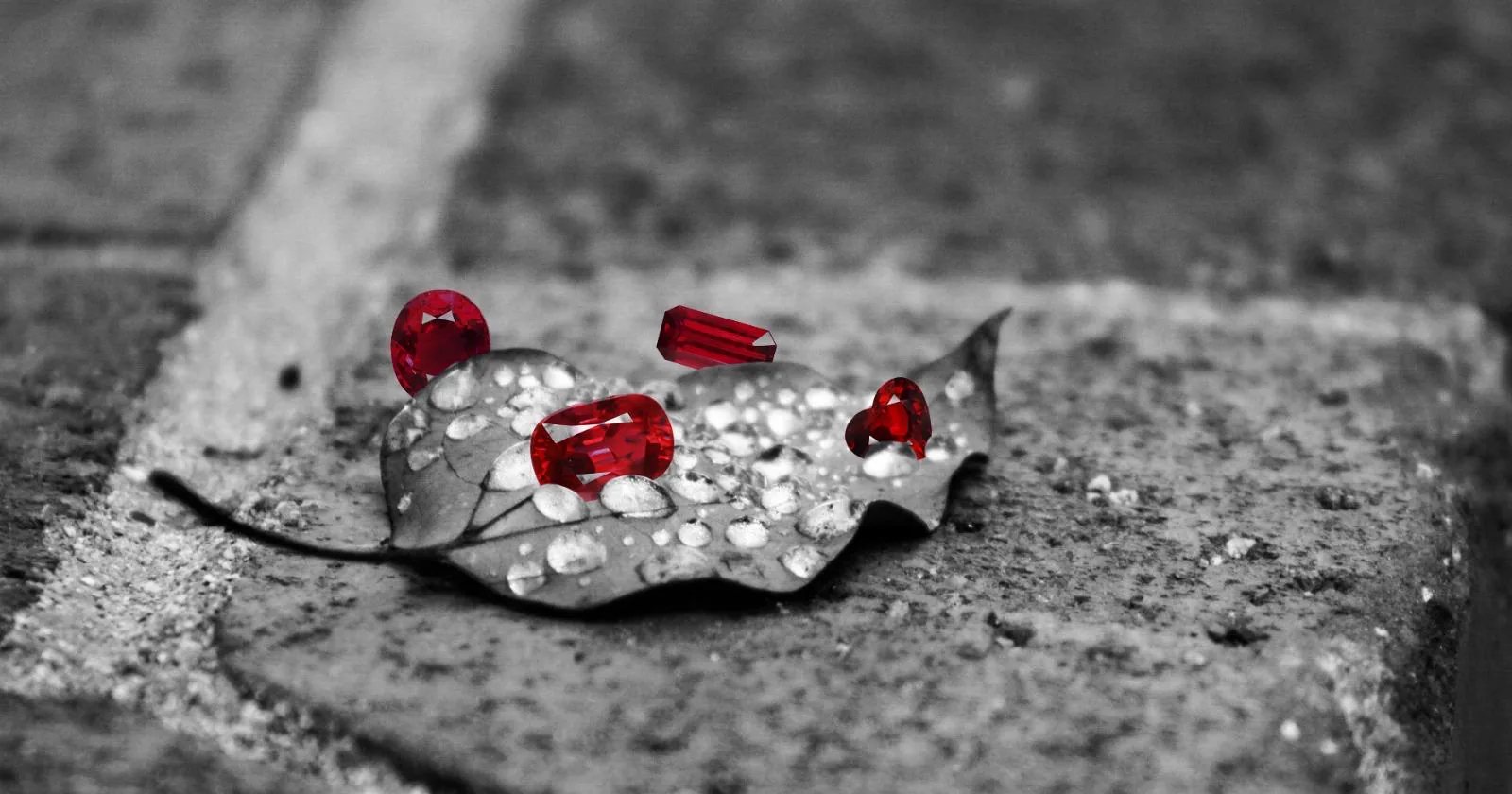
Almost every ruby is heated, and that is fine
Bangkok and Chanthaburi built the modern ruby trade on heat. Heating dissolves the fine rutile needles that make a stone sleepy, improves transparency, and pushes a purplish red towards pure red.
The change is permanent and stable. A heated ruby needs no special handling and behaves like any other corundum, which sits at 9 on the Mohs scale.
Unheated stones of fine colour trade at a large multiple of heated equivalents. That premium is real, but it only applies at the top of the quality range. An unheated report on a mediocre stone adds very little.
Flux healing sits in the middle
Heat is usually applied with a flux such as borax. During the process the flux enters surface-reaching fractures and helps them heal, leaving glassy residue inside the healed fissures.
Laboratories disclose this separately, typically as heat treatment with residue in fissures. The volume of residue matters. Small amounts are common and widely accepted. Heavy residue puts the stone in a lower price bracket and makes it more vulnerable at the bench.
This is the category where vague selling language does the most damage. Heated and heated with significant residue are not the same stone and should never be the same price.
Lead glass is a different product
Composite ruby is made by saturating heavily fractured, low grade corundum with high-lead glass. The glass fills the fracture network and makes the stone look transparent. In some material the glass accounts for a third of the volume.
These stones are damaged by things that never trouble a real ruby. Lemon juice etches them. An ultrasonic cleaner breaks them down. A jeweller's torch during a simple repair destroys them outright.
Composite ruby has a legitimate place at its own price, which is measured in tens of dollars per carat rather than thousands. It has to be sold as composite ruby or lead-glass-filled ruby. Anything less than that is misrepresentation.
What a report should tell you
A useful report separates identification from treatment from origin.
- Identification
- Natural corundum, variety ruby. This also rules out synthetic material, which has been produced commercially since 1902.
- Treatment
- No indication of heating, heating, heating with residue, or clarity modification by a filler. These are four different outcomes.
- Origin
- Mozambique from Montepuez and Burmese from Mogok carry the strongest names. Origin is an opinion, and a laboratory declines it when the chemistry is ambiguous.
Care follows the treatment
Tell your jeweller the treatment before any repair, resizing or resetting. This single sentence prevents most of the damage we see.
Heated and unheated ruby tolerate normal cleaning and normal bench work. Stones with heavy flux residue need the torch kept away from them. Lead-glass-filled material should never meet heat, ultrasonic cleaning or acid of any kind, including household cleaners.
The four questions
Is it heated. Is there residue in the fissures, and how much. Is there any glass or polymer filling. Who issued the report and does it state origin.
Ask them in that order. The answers determine both the price and how the stone gets treated for the rest of its life.
Looking for a stone like this?
We keep stock in Bangkok and answer questions about grading, treatment and price without pressure.

Join the conversation
Ask a question or share what you have seen. We read every comment and reply to the good questions.
Loading comments