Named for a Finnish mineralogist
Scientists first described vayrynenite in 1954 from a pegmatite at Viitaniemi in Eräjärvi, Finland. They named it after Heikki Väyrynen, a mineralogist from Helsinki. The name is hard to spell, and the trade often drops the two dots over the letters.
The mineral is a phosphate of manganese and beryllium. For decades it lived in mineral collections as small crystals, and nobody cut it. Gem quality crystals turned up later in Pakistan, in the Skardu region, and in Afghanistan. GIA reported its first faceted vayrynenite, from Afghanistan, in 2006.
Why it stays so scarce
Vayrynenite forms in pegmatites, which are coarse rocks that cool slowly from the last liquid of a granite. It grows as an alteration product of beryl and of a mineral called triphylite. It sits with tourmaline, topaz, apatite, quartz and amblygonite. The right chemistry rarely comes together, and clear crystals of any size are rarer still.
The numbers show it. Almost every faceted vayrynenite weighs under one carat. Stones near three carats exist but appear rarely. Pakistani material tends to run larger than Afghan material. Cutters work with small pieces, so the finished stones are small and few.
Pegmatites, in plain words
A pegmatite forms when a granite cools and the last watery melt crystallises slowly. Slow cooling gives crystals room to grow big. Pegmatites hold many of the world's tourmaline, topaz, beryl and other gems, and they hide pockets where clear crystals can grow.
Vayrynenite sits inside these rocks as an alteration product. Beryl and triphylite break down in hot fluids, and vayrynenite grows in their place. That process leaves small, scattered crystals, not big clean ones.
The colour
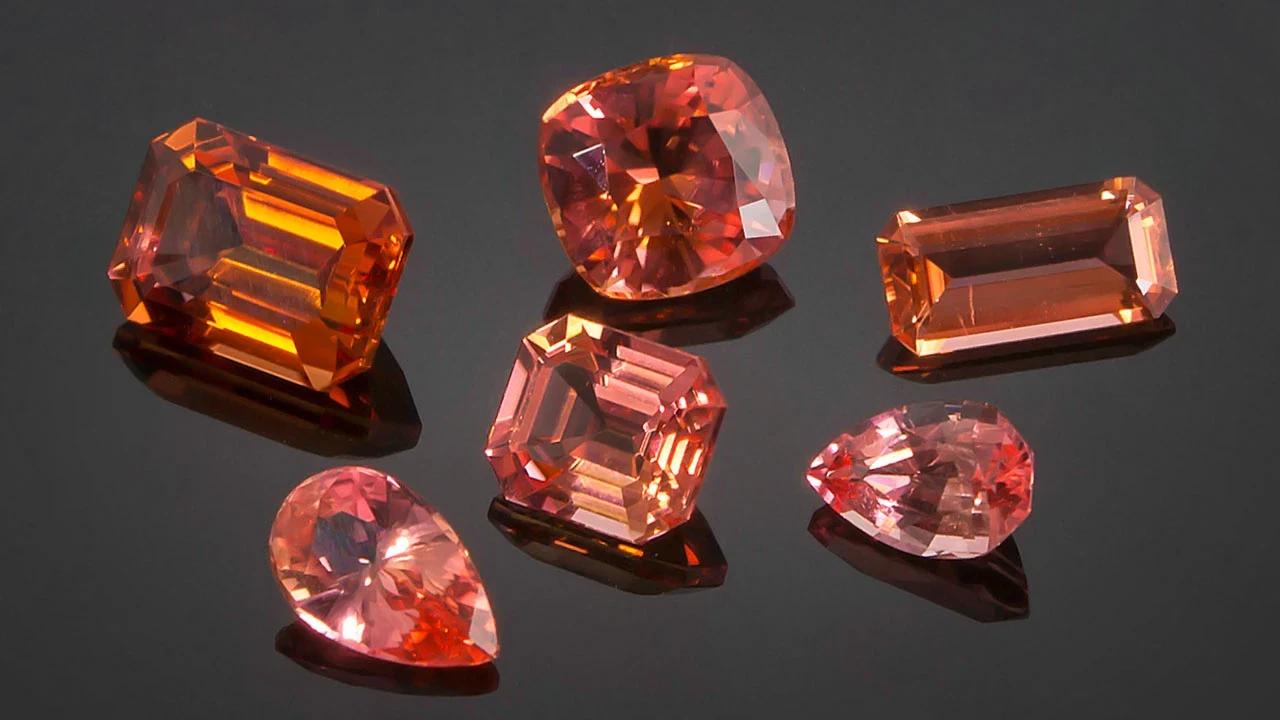
Fine vayrynenite shows a pinkish red with secondary flashes of peachy orange. Buyers compare it to a pink orange padparadscha sapphire. Lighter stones look salmon pink. Some look brown or grey.
The gem has strong pleochroism. Turn a stone and you see orangey colour in one direction, red in another and a darker red in a third. The cutter chooses the direction that puts the warmest orange red face up. You can see the effect yourself if you tilt a stone slowly under a window.
Colour quality follows the usual rule. Look for medium tone with strong saturation. A stone that looks pale peach or muddy brown costs far less than one that glows.
The properties that matter to a buyer
Numbers on a report tell you how the stone behaves. These are the ones that count.
- Composition
- Manganese beryllium phosphate with hydroxyl or fluorine. It is unrelated to beryl, even though beryllium sits in both.
- Hardness
- About 5 on the Mohs scale. That is softer than window glass. Dust scratches it.
- Refractive index
- Roughly 1.64 to 1.67. A moderate reading, so the stone glows more than it flashes.
- Density
- About 3.2. A similar size to a tourmaline at the same weight.
- Pleochroism
- Strong. Orange, red and darker red, depending on direction.
Wear and care
At hardness 5, vayrynenite belongs in a collection more than on your hand. Ordinary dust scratches it, so a ring shows wear quickly. Earrings and pendants see much less contact and suit it far better.
Wrap each stone in a soft cloth and store it apart from harder gems. Clean it with a damp cloth. Avoid ultrasonic cleaners, steam and any chemical cleaner. Tell a jeweller before any repair, and remove the stone before a torch goes near it.
The chemistry in plain words
The formula reads MnBe(PO4)(OH,F). In plain words, the mineral holds manganese, beryllium, phosphate and a mix of hydroxyl and fluorine. Manganese produces the pink and red colour, the same way it colours morganite and rhodonite. Beryllium and phosphate build the crystal.
Phosphate minerals tend to be soft. That is why vayrynenite scratches so much more easily than silicate gems such as garnet and tourmaline. The bonds in the crystal are weaker, and no cutting skill changes that.
Look alikes and how they differ
Several orange and pink gems share vayrynenite's colour range. The differences matter for price and for durability.
- Padparadscha sapphire
- Hardness 9 and far more durable. It shows a pink orange without the strong red flash, and fine stones cost much more than most gems in this colour range.
- Spessartite garnet
- Hardness 7 to 7.5 and widely available in vivid orange. Our spessartite guide covers it. It lacks the pink red side of vayrynenite.
- Imperial topaz
- Hardness 8 with a similar peach to pink orange colour. It comes in large clean sizes and costs less per carat.
- Morganite
- Hardness 7.5 to 8 with a soft peach pink. It looks paler and cooler.
Only lab tests separate them with certainty. The refractive index and the strong pleochroism of vayrynenite are the clues a gemologist checks first.
Reading a lab report for a rare stone
A report matters more on a rare stone than on a common one. Read its lines in this order.
- Species and variety
- The report should say vayrynenite. If it uses a vague term such as pink phosphate, ask for a fuller report.
- Weight and measurements
- Weight in carats and size in millimetres. On a stone this small, a difference of a few hundredths of a carat changes the price.
- Shape and cutting style
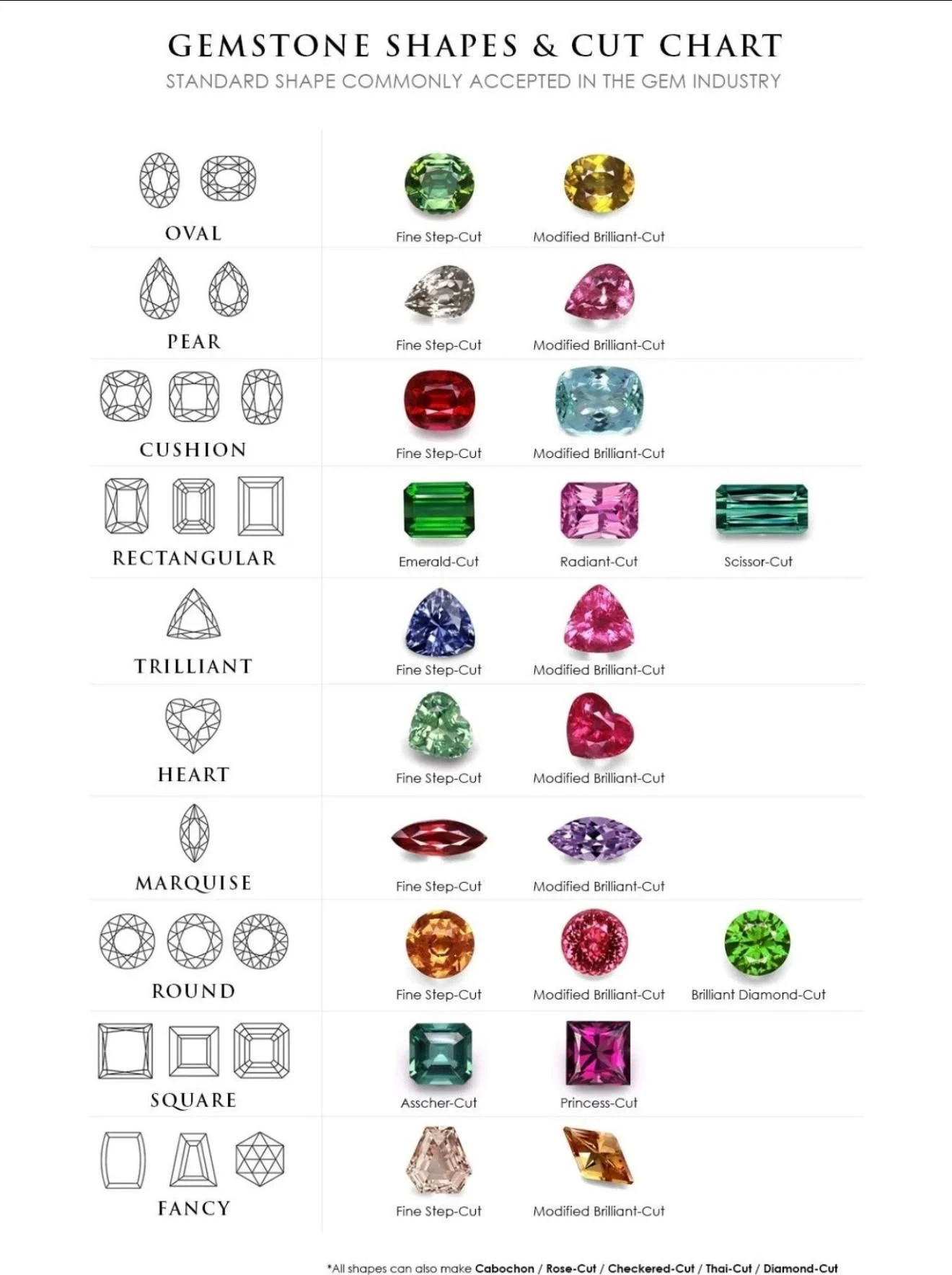
- The outline and facet pattern, such as oval brilliant or emerald cut.
- Colour description
- Words such as orangy pink or pinkish red. Compare them to the photo and the video.
- Comments
- Treatment, if any, and notes on inclusions or damage.
- Origin
- Some labs give one. Others decline for a rare species, and that is a normal result.
How to buy one
No established price table exists, because only a handful of stones trade each year. Price climbs quickly with size and colour, and each sale is a negotiation. That puts more weight on your own checks.
- Get a lab report
- Several pink and orange gems look the same to the eye, including padparadscha sapphire, spessartite and imperial topaz. A lab report that names the species removes the doubt.
- Ask about origin
- Pakistan and Afghanistan both produce it. Larger stones tend to come from Pakistan.
- Check the edges
- A soft stone chips at the girdle. Look at the outline under magnification and avoid stones with nicks.
- Look at the cut
- Small stones hide poor cutting badly. Check for a window and an even colour.
- Buy for the right reason
- Buy vayrynenite because you want the species. If you want an orange pink stone to wear daily, spessartite garnet or sapphire lasts far better.
Living with a collector's gem
Many gems exist for collectors first. They earn their place through scarcity, science and story, not through daily wear. Treat vayrynenite that way and it gives years of pleasure.
Keep a small file for every rare stone. Store the lab report, the invoice, the seller's details and photographs in daylight. Photograph the stone from two or three angles, because pleochroism shifts the colour and a single photo hides the range. Insure valuable stones separately and update the valuation from time to time.
- Can I wear it every day?
- No. Choose a stone that rates 7 or higher for daily wear.
- Why do prices differ so much between sellers?
- No market price table exists. Each seller prices by feel, so compare several stones of similar size and colour before you decide.
- How should I store it?
- Wrap it in a soft cloth and keep it in its own compartment, away from harder gems.
Looking for a stone like this?
We keep stock in Bangkok and answer questions about grading, treatment and price without pressure.

Join the conversation
Ask a question or share what you have seen. We read every comment and reply to the good questions.
Loading comments