
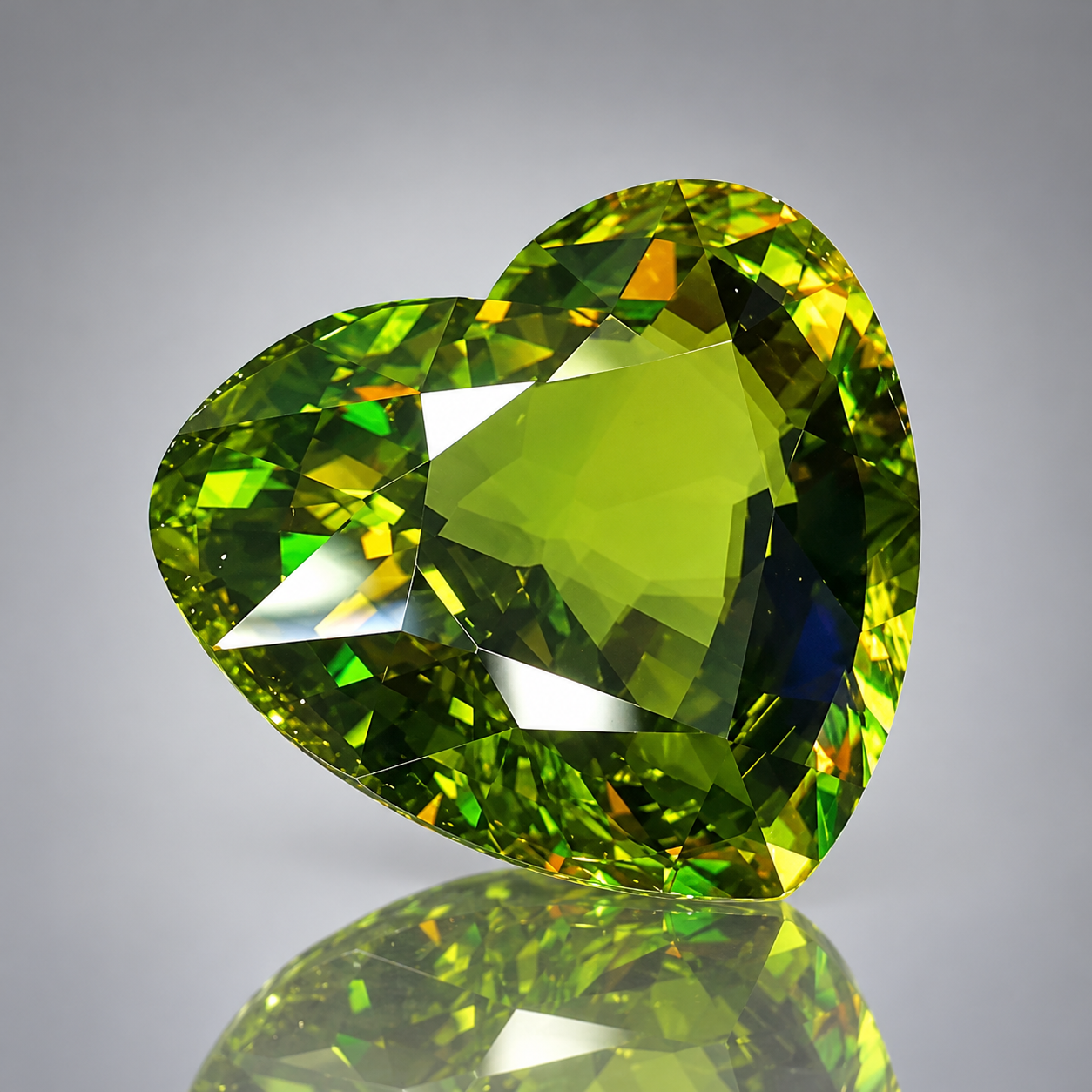
What sphene is
Sphene is calcium titanium silicate, CaTiSiO5. The International Gem Society (IGS) describes it as the titanium rich member of the titanite group and the only member commonly cut as a gem.
The two names mean the same stone. Sphene comes from a Greek word for wedge, which describes the shape of its crystals. Titanite points to the titanium in its formula.
Where the fire comes from
Dispersion measures how much a stone splits white light into spectral colours. IGS and the GemDat database both list sphene at 0.051. IGS rates that as strong and states that sphene's fire exceeds diamond's.
Two more properties add to the effect. The refractive index runs from 1.843 to 2.110, which is higher than a standard refractometer reads, so the instrument shows over the limit. The luster is resinous to adamantine, and IGS notes that a well polished stone can approach the luster of diamond.
Birefringence is high, between 0.100 and 0.192. IGS reports 0.160 for Madagascar material. IGS notes that this strong double refraction often makes facet edges look doubled.
Colour and what causes it
IGS lists yellow, orange, brown, green, colourless, grey, blue, rose red and black, often with zoning. Iron drives the range. Low iron gives green and yellow, and high iron gives brown and black.
Chromium produces the rare intense green known as chrome sphene. Sphene is also pleochroic. IGS rates it moderate to strong, with pale yellow, brownish yellow and orange brown as the three directions.
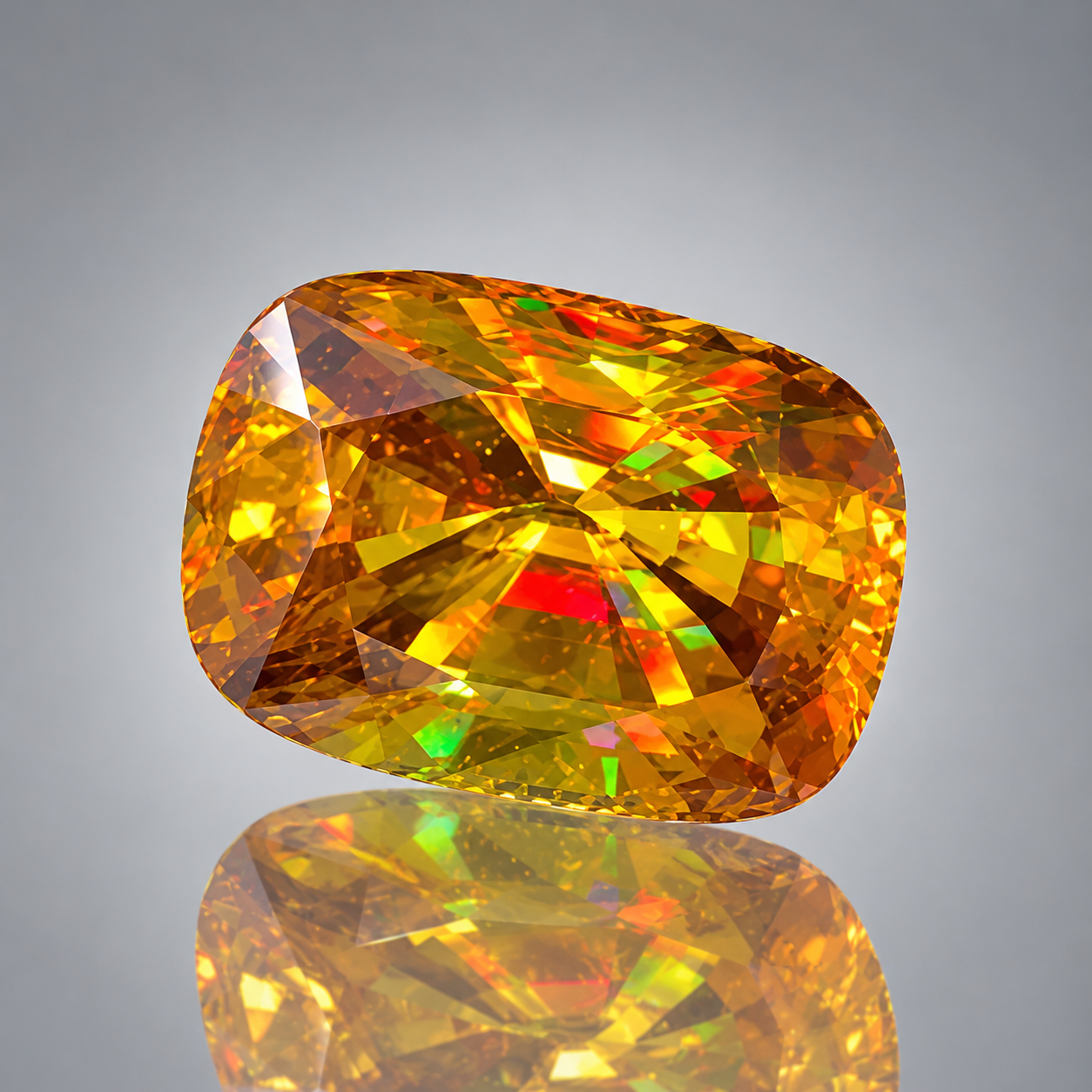
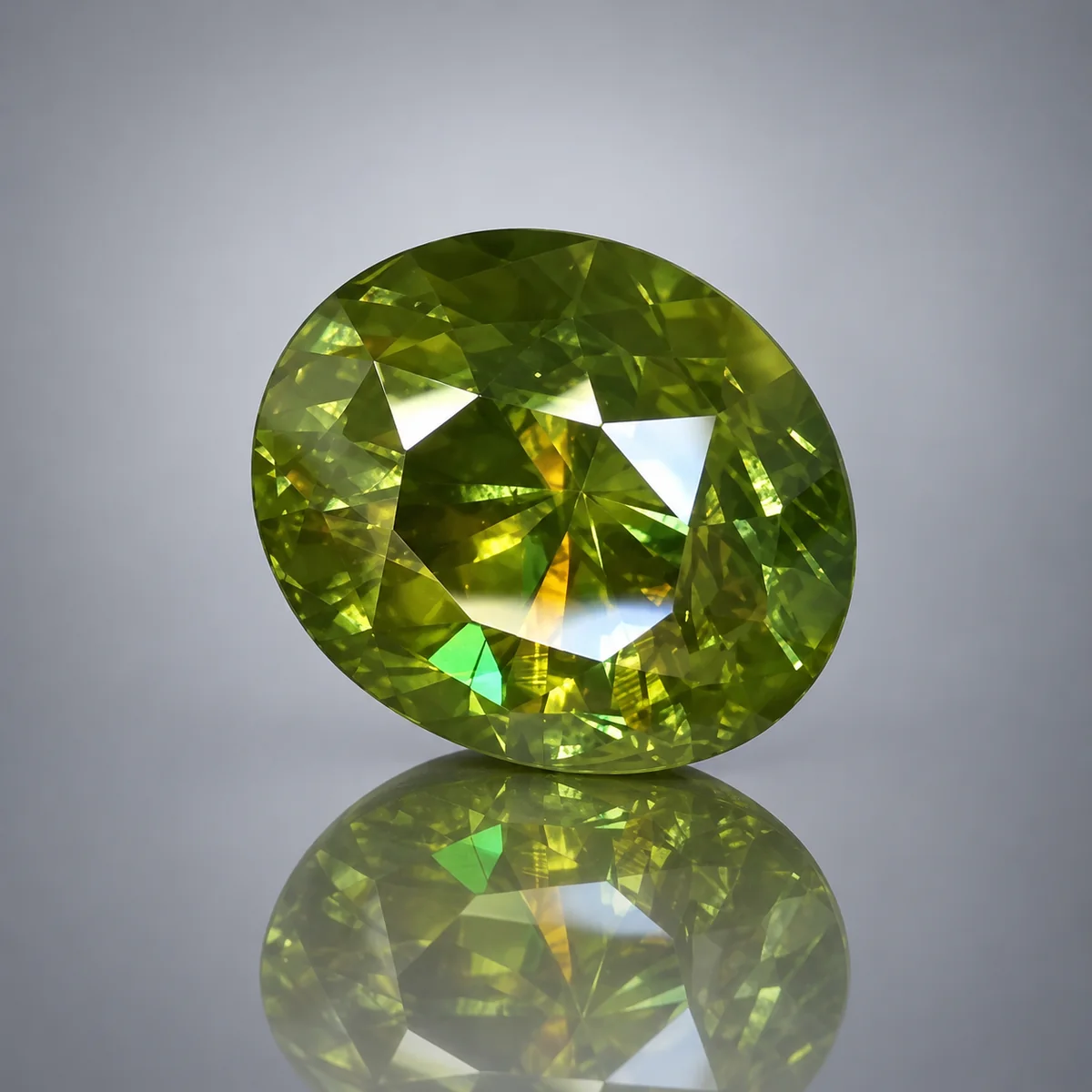
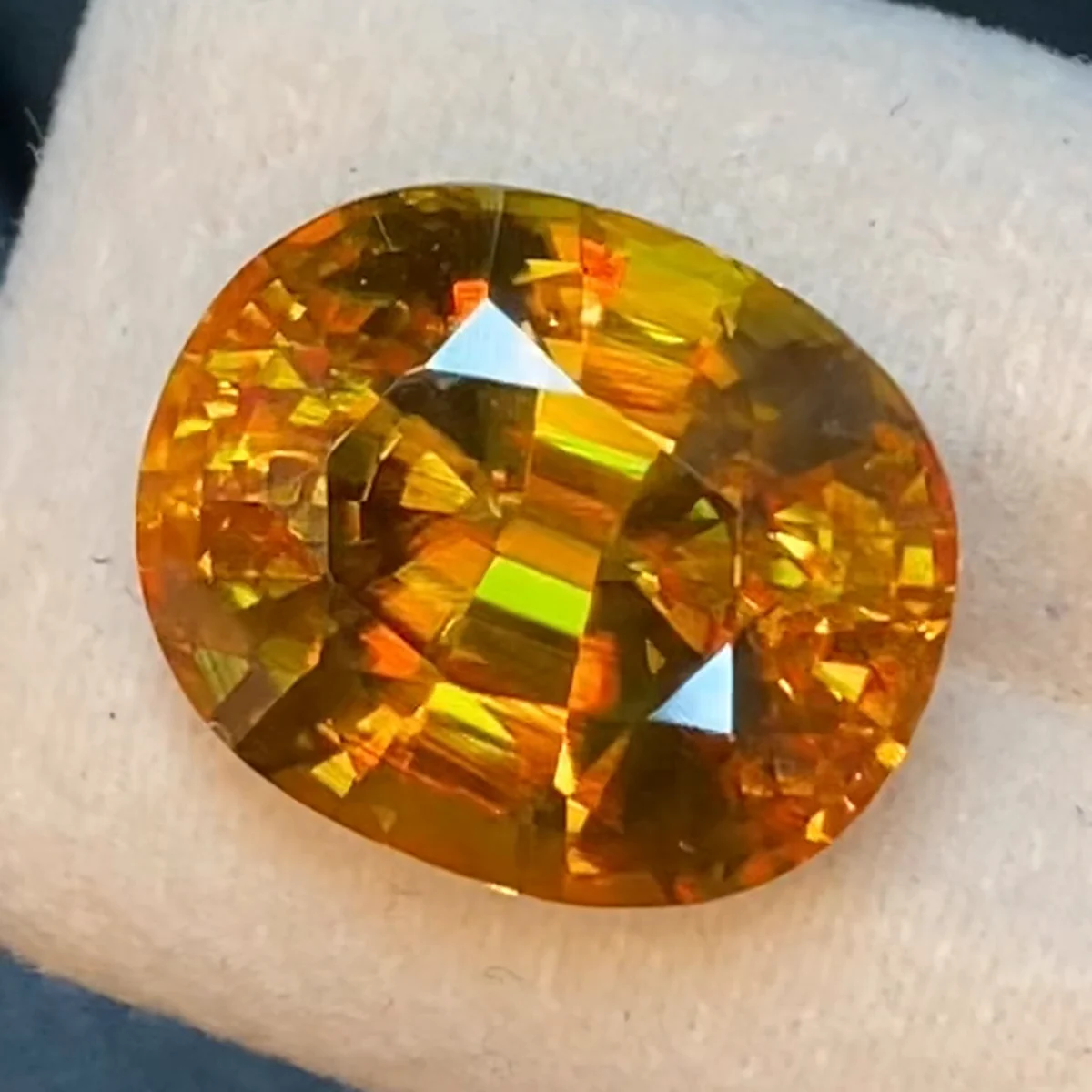
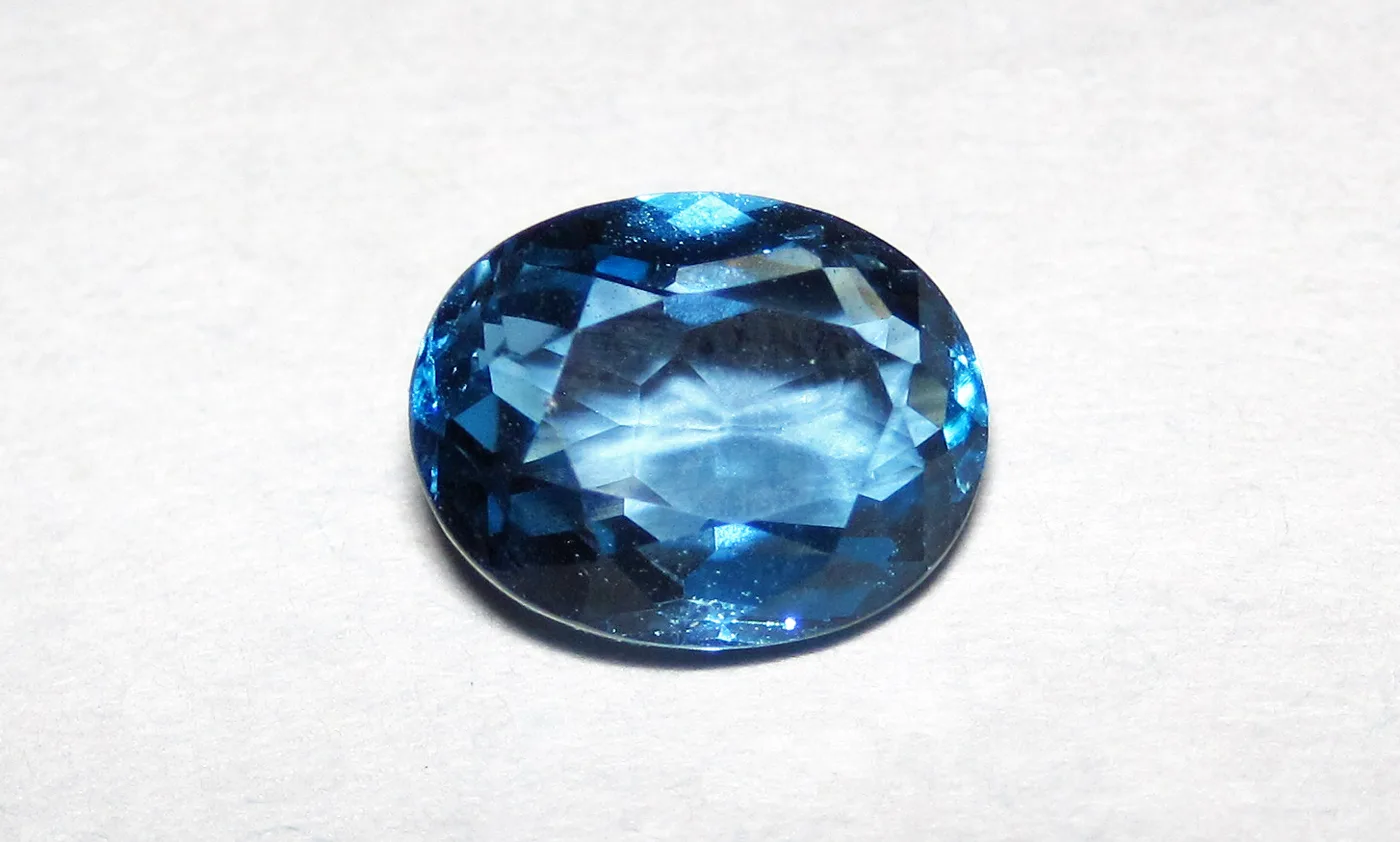
Our three Madagascar stones show the range. One is lime green, one is golden yellow and one is chrome green.
Sources and sizes
IGS names Canada, Madagascar and Mexico as the primary sources. Madagascar yields green crystals, Canada yields brown and black material and Baja California in Mexico yields yellow brown, brown and chrome green crystals. Minor sources include Brazil, India, Sri Lanka, Afghanistan, Kenya and Myanmar.
Size is the limit. IGS says clean stones over 5 to 10 carats are very rare. Indian material generally cuts to about 10 carats and Madagascar material to about 15. The largest cut sphene IGS lists is a near flawless 106 carat stone in a private collection.
Our three Madagascar stones weigh 13.60, 18.32 and 26.85 carats, so two of them sit above the size IGS gives for typical Madagascar stones. IGS also notes that sphene is usually included and rarely eye clean, so check the stone in motion before you buy.
Treatment and care
IGS reports that heating is the typical treatment and that it can turn sphene orange or red. The stone is heat sensitive. Ask for a written treatment statement. Our listings state treatment on every stone, and all three of ours carry none.
Hardness is 5 to 5.5 on the Mohs scale, and cleavage is distinct in one direction. IGS rates wearability as poor and recommends protective settings. That makes a pendant or earrings the safer choice than a ring worn every day.
Clean sphene with a soft brush, mild detergent and warm water. IGS warns against steamers and ultrasonic cleaners. Protect it from impacts, scratches, heat and acids, including sweat.
Looking for a stone like this?
We keep stock in Bangkok and answer questions about grading, treatment and price without pressure.

Join the conversation
Ask a question or share what you have seen. We read every comment and reply to the good questions.
Loading comments